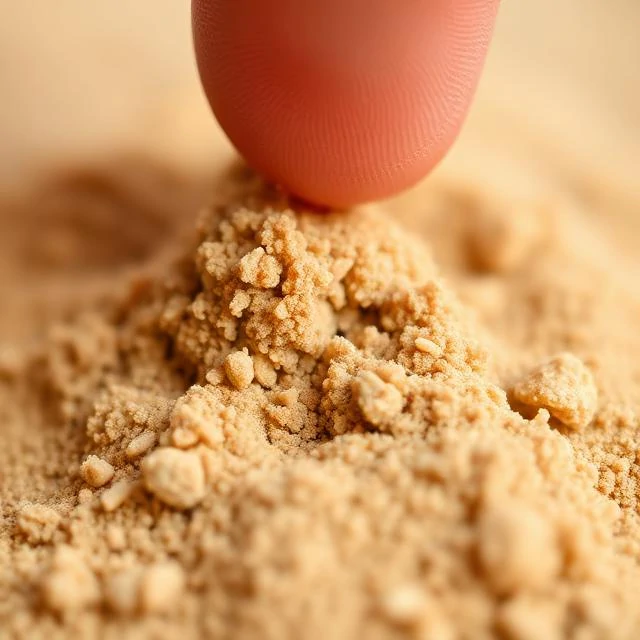
Sand is the coarsest of the three main soil particles, larger than silt and much larger than clay. It comes from weathered rock, mostly quartz, and feels gritty between the fingers. A soil that is mostly sand is called sandy soil, or in the extreme, sand.
Sandy soils have clear advantages. They drain fast, warm early in spring, and are easy to work with hand tools. Root crops like carrots and potatoes grow straight in them. But they also hold few nutrients, dry out quickly, and leach fertiliser into groundwater. Organic matter disappears fast because microbes break it down quickly in the well-aerated conditions.
Managing sandy soil
- Add compost and manure regularly to build organic matter
- Use cover crops to hold nutrients over winter
- Irrigate frequently in small amounts rather than deeply
- Choose crops that tolerate drought, like rye or millet
Sandy soils dominate parts of northern Europe, the US Southeast, and the Sahel. They can be productive, but they demand more attention than a loam. The grower who ignores their limitations will lose nutrients and water both.
Comments
No comments yet. Be the first to share a thought.
Leave a comment