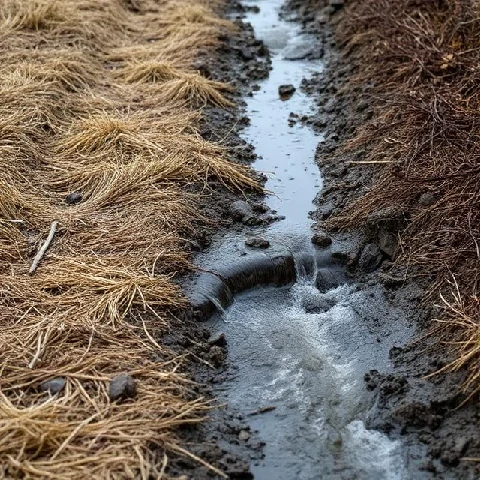
Runoff is water that flows over the land surface instead of soaking in. It happens when rain falls faster than the soil can absorb it, or when the ground is already saturated, frozen, or compacted. On a farm, runoff carries soil, nutrients, and pesticides into ditches, streams, and lakes.
The problem is not just the water. It is what the water takes with it. Eroded topsoil is the most fertile part of the field. Phosphorus attached to sediment feeds algal blooms. Nitrate dissolves and travels further. Pesticides can harm aquatic life downstream. In cities, runoff from streets causes similar problems, but farms are often the largest source in rural watersheds.
Reducing runoff
- Keep soil covered with crops or residue year-round
- Reduce tillage to preserve soil structure
- Plant grassed waterways and buffer strips
- Avoid applying fertiliser before heavy rain
Constructed wetlands and detention ponds capture runoff before it leaves the farm. Cover crops scavenge residual nitrogen in autumn. None of these is a complete solution, but together they cut the load reaching downstream water bodies.
Comments
No comments yet. Be the first to share a thought.
Leave a comment