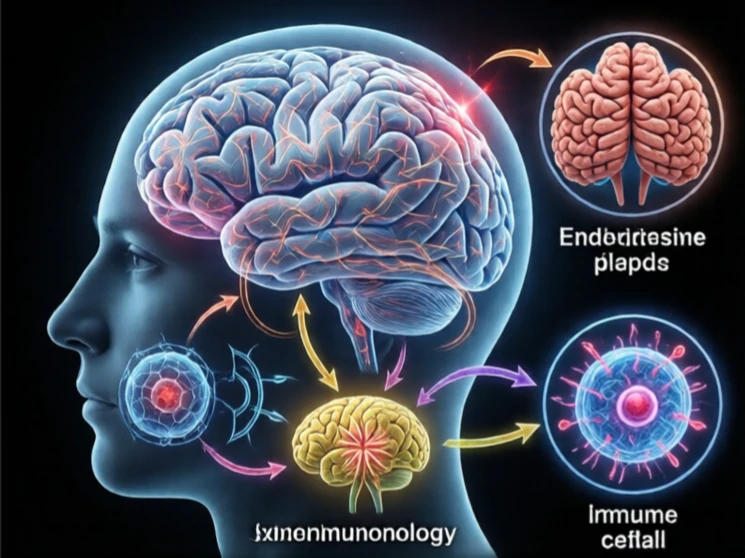
Psychoneuroimmunology examines how psychological processes, the nervous system, and the endocrine system interact to influence immune function and health. The field treats mind and body as a single regulatory network rather than separate domains.
Stress hormones such as cortisol can suppress certain immune responses, increasing susceptibility to infection or slowing wound healing. Chronic psychological stress has been linked to elevated inflammation and poorer outcomes in conditions ranging from the common cold to cardiovascular disease. Conversely, social support, optimistic outlook, and certain behavioral interventions appear to buffer immune function. Conditioned immune responses—demonstrated in animals and to a limited extent in humans—show that the immune system can learn associations just as behavior can.
The bidirectional pathways are complex. Cytokines released by immune cells influence brain activity and mood, contributing to the fatigue and withdrawal that accompany illness. Research in the field informs both clinical practice and public-health strategies that address psychological and social factors alongside biological ones.
Health is not solely a matter of pathogens and cells. The brain and the immune system continually converse.
Comments
No comments yet. Be the first to share a thought.
Leave a comment