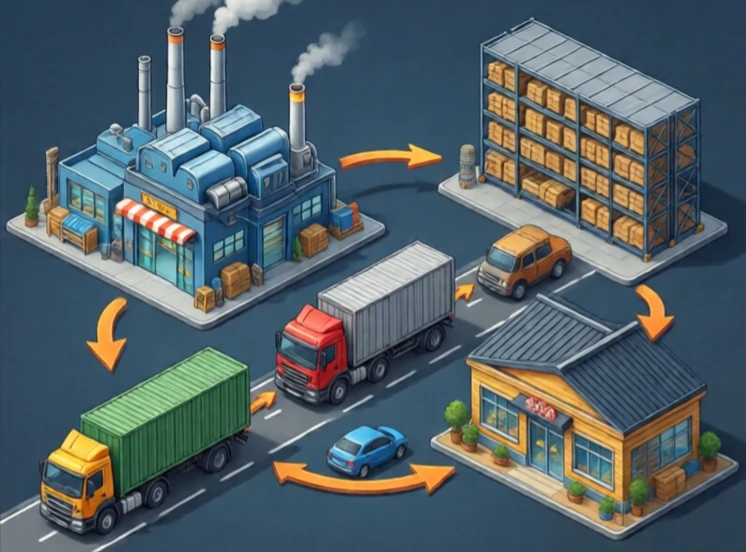
Raw materials become finished goods, move through warehouses and distribution centers, and finally appear on store shelves. The network of organizations and processes that makes this happen is the supply chain. Retail sits at the consumer end of that chain.
A reliable supply chain keeps stores in stock without excessive inventory. It involves suppliers, manufacturers, logistics providers, and the retailer’s own distribution system. Disruptions anywhere along the chain show up as empty shelves or inflated costs. Visibility and collaboration across partners improve responsiveness.
Retailers increasingly treat supply-chain performance as a strategic advantage rather than a back-office function. Faster, more flexible chains support both physical stores and e-commerce fulfillment. The customer rarely sees the supply chain, yet every available product depends on it.
- Network that produces and delivers goods to the point of sale
- Includes suppliers, logistics, and distribution
- Determines product availability and cost
- Critical to both store and online performance
Comments
No comments yet. Be the first to share a thought.
Leave a comment