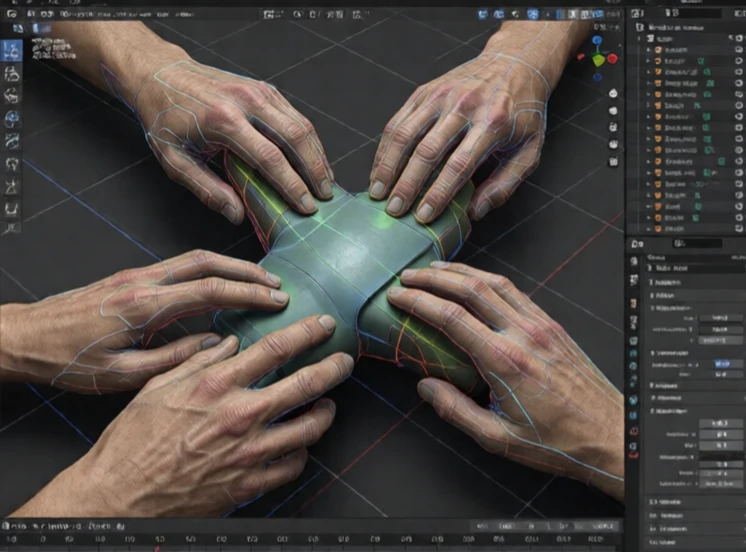
Grasp planning is how a robot decides where and how to grip an object. It considers the object's shape, weight, surface friction, and the task. A grasp that works for lifting a box might fail for inserting a peg. The planner chooses contact points and finger positions that keep the object stable.
Early grasp planning used geometric rules. Find parallel surfaces, place fingers there. That works for simple shapes but fails on complex objects. Modern planners use machine learning and simulation. They generate thousands of candidate grasps, test them in physics simulation, and pick the one with the highest success probability. Some systems learn from human demonstrations.
What grasp planning considers
- Object geometry and center of mass.
- Friction between fingers and object.
- Gripper kinematics and force limits.
- Task requirements: lift, insert, pour, hand over.
- Obstacles around the object.
Grasping is hard because the real world is uncertain. The object might be heavier than expected. The surface might be slippery. The fingers might slip. Good grasp planning includes force control and tactile feedback to adjust after contact. It also plans for failure: if the object slips, the robot regrips. In warehouses, grasp planning lets robots pick millions of different items without teaching each one. In homes, it lets robots load a dishwasher. It is one of the key bottlenecks on the path to truly useful general-purpose robots.
Comments (2)
Leave a comment