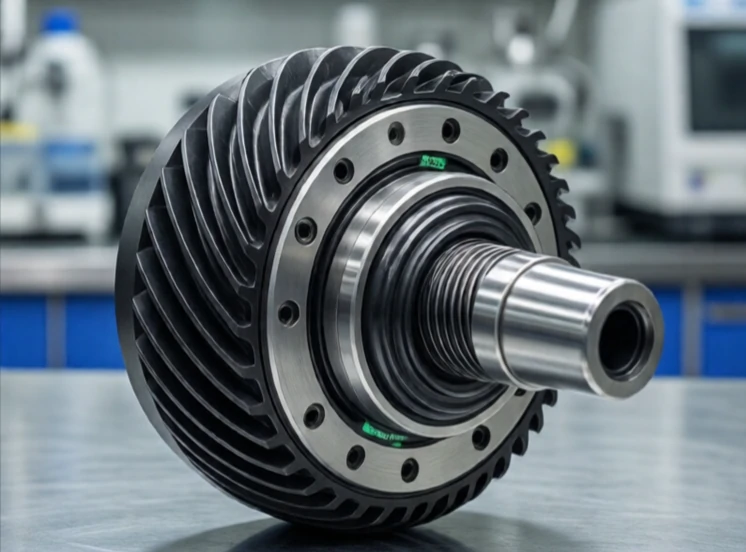
A gearbox changes speed and torque. It takes the fast, low-torque output of a motor and converts it into slower, higher-torque motion. Or the reverse. Gears trade rotational speed for force, and the ratio determines how much.
Robot joints almost always use gearboxes. A brushless motor might spin at 5,000 RPM, but a robot arm needs to move at 50 RPM with high torque. A gear ratio of 100:1 makes that possible. Common types include planetary, harmonic, and cycloidal drives. Each has different backlash, efficiency, and cost characteristics.
Gearbox types in robotics
- Planetary: compact, efficient, moderate backlash.
- Harmonic: zero backlash, high ratio, expensive.
- Cycloidal: high torque, durable, used in industrial robots.
- Worm gear: high ratio, self-locking, low efficiency.
- Belt and pulley: quiet, low backlash, limited ratio.
Backlash is the enemy of precision. It is the play between gear teeth when direction reverses. A robot arm with backlash cannot hold a position accurately. Harmonic drives solve this with a flex spline that eliminates play, but they cost more. Planetary gearboxes are cheaper but have more backlash. Cycloidal drives handle high shock loads, which is why they are common in the base joints of industrial robots. The gearbox is often the most expensive mechanical component in a robot joint. Choosing the right one is a balance of precision, torque, size, and budget.
Comments
No comments yet. Be the first to share a thought.
Leave a comment