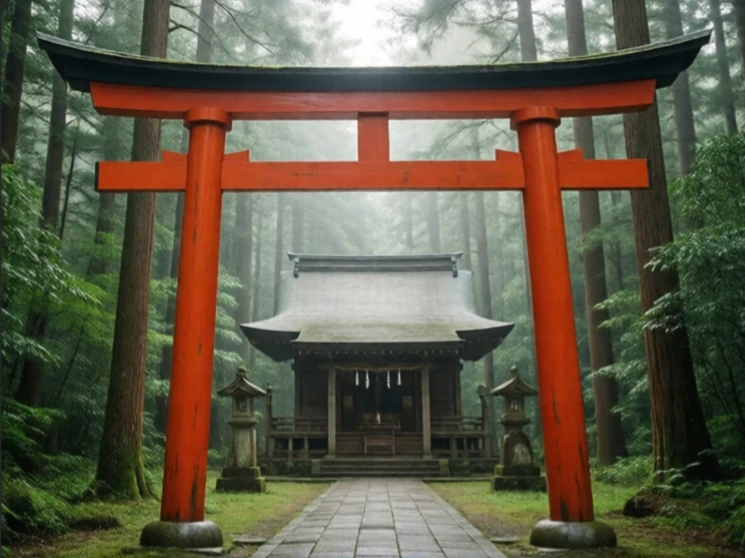
Shinto is the way of the kami. It is the indigenous religious tradition of Japan, centered on the veneration of the sacred powers that inhabit natural places, ancestral lines, and certain extraordinary persons. There is no single founder, no binding creed, and no sharp boundary between the religious and the cultural.
Kami are not gods in the Western monotheistic sense. They are the awesome, the superior, the numinous—mountains, waterfalls, ancient trees, the spirits of the dead, the imperial ancestors. Shrines, marked by the torii gate, provide the places where humans approach them. Purification with water, offerings of food and sake, and rhythmic clapping to attract attention are the ordinary gestures of respect. Major festivals, matsuri, bring whole communities into temporary communion with the kami through processions, music, and shared meals.
Shinto has coexisted for centuries with Buddhism, often within the same families and even the same temple-shrine complexes. In the modern period it was briefly elevated as a state ideology, then disestablished after 1945. Today it remains woven into life-cycle rites, New Year visits, and the quiet sense that certain places are set apart.
At its simplest, Shinto is the practiced conviction that the world is alive with sacred presence and that human beings do well to approach that presence with gratitude and care.
Comments
No comments yet. Be the first to share a thought.
Leave a comment