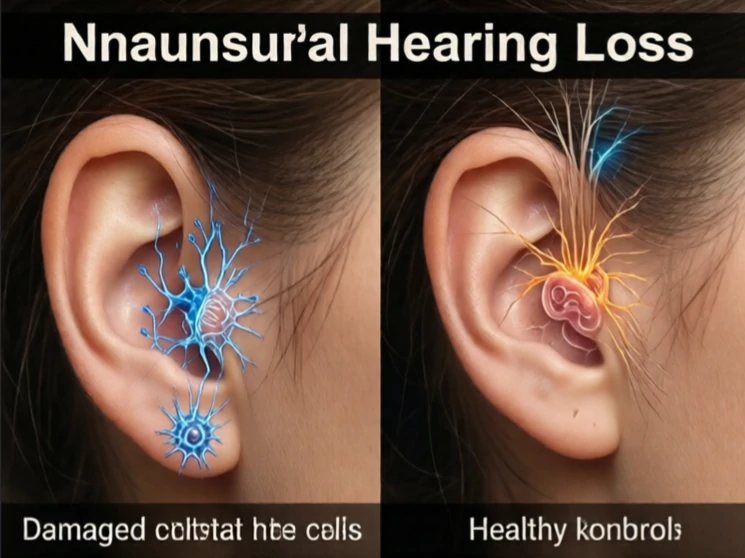
Sensorineural hearing loss results from damage to the cochlea’s hair cells or to the auditory nerve. The mechanical delivery of sound may be intact, yet the conversion to neural signals or the transmission of those signals is impaired.
Causes include aging, prolonged exposure to loud noise, certain medications, infections, and genetic factors. High-frequency hearing is often affected first. The loss is usually permanent because mammalian hair cells do not regenerate. Discrimination of speech, especially in noisy environments, becomes difficult even when amplification makes sounds audible.
Hearing aids can help by amplifying remaining function; cochlear implants bypass damaged hair cells and stimulate the auditory nerve directly, restoring useful hearing for many people with severe loss. Prevention through hearing protection and avoidance of ototoxic drugs remains the most effective strategy.
When the inner ear or auditory nerve can no longer transduce or transmit sound faithfully, the result is sensorineural hearing loss.
Comments
No comments yet. Be the first to share a thought.
Leave a comment