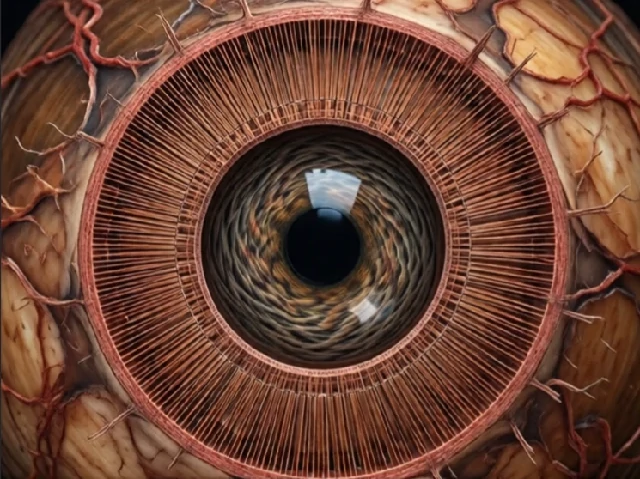
Rods are the retinal photoreceptors specialized for vision in dim light. They detect black, white, and shades of gray and are far more sensitive than cones, yet they provide no color information and relatively poor acuity.
Rods dominate the peripheral retina and are absent from the fovea. A single photon can produce a detectable response in a rod, enabling night vision. In very low light the visual system relies almost entirely on rods; color disappears and fine detail is lost. Rhodopsin, the photopigment in rods, is bleached by bright light and regenerates slowly, which is why adaptation to darkness takes many minutes.
Because rods are concentrated outside the center of the retina, dim objects are often seen more easily when viewed slightly off-center. Diseases that damage rods, such as retinitis pigmentosa, first impair night vision and peripheral vision. The division of labor between rods and cones allows the visual system to operate across an enormous range of light intensities.
When the light is too dim for color and sharp detail, the rods still provide a usable image.
Comments
No comments yet. Be the first to share a thought.
Leave a comment