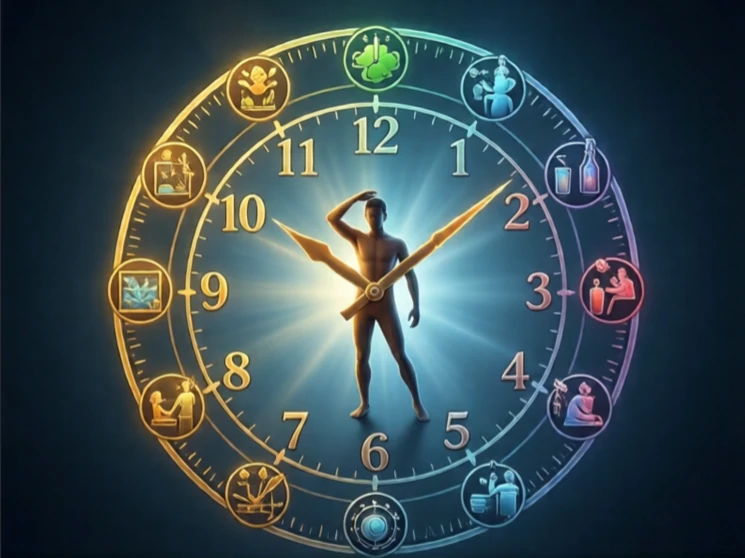
Circadian rhythms are the roughly 24-hour cycles that govern sleep and wakefulness, body temperature, hormone release, and many other physiological processes. They are generated internally yet entrained by external cues, especially light.
The master clock sits in the suprachiasmatic nucleus of the hypothalamus. It receives direct input from specialized photoreceptors in the retina that detect ambient light levels. In turn it coordinates peripheral clocks throughout the body via neural and hormonal signals, including the nighttime release of melatonin from the pineal gland. When the external day-night cycle shifts—as in jet lag or night-shift work—the internal clock realigns only gradually, producing the familiar symptoms of fatigue and disrupted sleep.
Individual differences in circadian preference, often called chronotype, range from early-rising “larks” to late-operating “owls.” Adolescence typically brings a shift toward later timing, which collides with early school schedules. Disruption of circadian rhythms is linked to metabolic problems, mood disorders, and reduced cognitive performance.
The body keeps time even when clocks and calendars are absent. That internal day is the circadian rhythm.
Comments
No comments yet. Be the first to share a thought.
Leave a comment