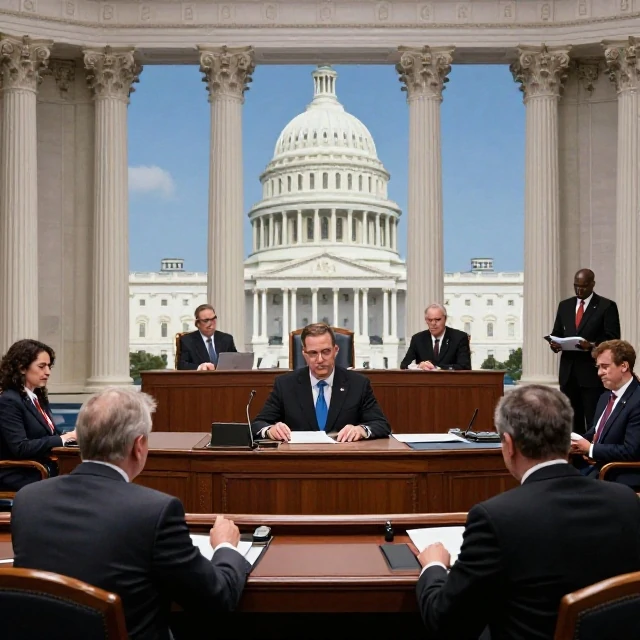
A representative government is a system in which citizens elect officials to make laws and decisions on their behalf. The people do not govern directly. They choose representatives. Those representatives deliberate, debate, and vote. The people hold them accountable through elections. It is also called a republic or a democratic republic.
The framers of the US Constitution chose representative government over direct democracy. They feared mob rule. They wanted deliberation. James Madison argued that a republic would refine and enlarge the public views. Representatives would filter passion through reason. The system is not perfect. Representatives can be captured by interests. They can ignore their constituents. But elections provide a check. If they fail, they can be voted out.
Features of representative government
- Elected officials make laws.
- Regular elections hold officials accountable.
- Multiple levels of representation: local, state, national.
- Political parties organize competition.
- Constitutional limits protect minority rights.
Representative government varies by country. Some use proportional representation. Parties get seats based on their share of the vote. Others use single-member districts. The candidate with the most votes wins. Each system has trade-offs. Proportional systems are more representative. They also produce coalition governments. Single-member districts are simpler. They also waste votes. The choice reflects a country's history and values. Representative government is not direct democracy. The people do not vote on every law. They vote for people who make laws. That is a compromise. It is a compromise between efficiency and participation. It is a compromise between expertise and accountability. It is the compromise that most democracies have chosen. It is not perfect. But it is better than the alternatives.
Comments
No comments yet. Be the first to share a thought.
Leave a comment