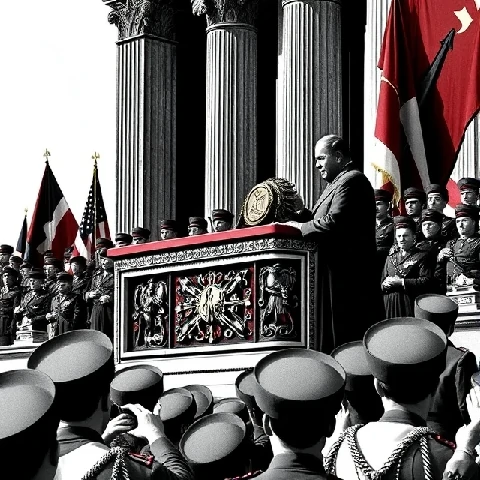
Tyranny is cruel and oppressive rule by an absolute ruler. The tyrant holds power without legal constraint, often seizing it by force or inheriting it. The word comes from the Greek tyrannos, which originally meant a ruler who seized power unconstitutionally. In ancient Greece, a tyrant was not necessarily cruel. Some were popular. But over time, the term acquired its modern meaning: a ruler who abuses power for personal gain and oppresses the people. Plato and Aristotle analyzed tyranny as a corrupt form of monarchy. They argued that tyrants are driven by self-interest and fear, and that they surround themselves with flatterers and spies.
Tyranny is not limited to ancient Greece. It has appeared in many times and places. The Roman emperors, the medieval kings, the modern dictators. Hannah Arendt analyzed totalitarianism, a 20th-century form of tyranny that uses ideology and terror to control every aspect of life. Tyranny is not the same as authoritarianism, though the two overlap. Authoritarianism restricts political freedom. Tyranny adds cruelty and personal rule. Resistance to tyranny is a theme in political philosophy. Locke argued that people have a right to revolution when government becomes tyrannical. The American and French revolutions drew on that idea. Tyranny is a reminder that power corrupts, and that absolute power corrupts absolutely.
Features of tyranny
- Absolute power. No legal or institutional constraint.
- Cruelty. Oppression and violence against subjects.
- Self-interest. Rule for personal gain.
- Fear. Rule through intimidation and surveillance.
Tyranny is not the same as dictatorship. A dictator may rule with popular support. A tyrant rules against the interests of the people.
Comments
No comments yet. Be the first to share a thought.
Leave a comment