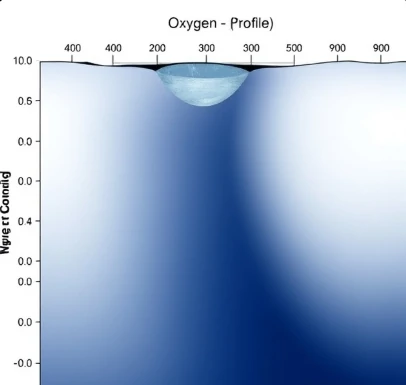
When the concentration of dissolved oxygen in water falls low enough to stress or kill aerobic organisms, the condition is called hypoxia. Thresholds vary by species, but values below about 2 milligrams per liter are widely used as a practical definition for severe hypoxia.
Coastal hypoxia is often linked to eutrophication: excess nutrients stimulate algal growth, and the subsequent decomposition of organic matter consumes oxygen. Stratification prevents resupply from the atmosphere. Open-ocean oxygen minimum zones occur naturally at intermediate depths where organic matter is respired and circulation is sluggish; these zones are expanding in some regions as the ocean warms and becomes more stratified.
Hypoxia alters food webs, creates habitat compression for mobile species, and can trigger mass mortalities of sessile organisms. Monitoring oxygen levels and reducing nutrient inputs are the main management responses in coastal waters. Climate-driven changes in open-ocean oxygen content are a growing concern for deep-sea and midwater ecosystems.
- Low dissolved-oxygen conditions
- Stresses or kills aerobic marine life
- Often linked to nutrient enrichment and stratification
- Expanding in some open-ocean regions
Comments
No comments yet. Be the first to share a thought.
Leave a comment