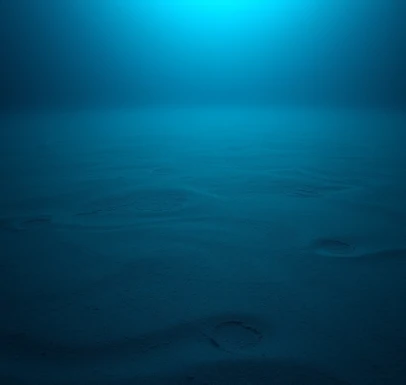
Beyond the continental slopes the seafloor levels out into vast, sediment-covered expanses that can stretch for hundreds of kilometers. These abyssal plains lie typically between 3,000 and 6,000 meters deep and rank among the flattest regions on Earth.
Fine particles of clay, silt, and the remains of surface plankton settle slowly through the water column and accumulate over millions of years. Turbidity currents occasionally race down the slopes and spread new layers across the plain, yet the overall topography remains remarkably even. Few large animals live here; the community consists mainly of sparse invertebrates and microbes adapted to cold, high-pressure, food-poor conditions.
Mapping these plains has improved with multibeam sonar and autonomous vehicles. The sediments archive climate history, and the plains themselves influence deep circulation patterns. Despite their remoteness, they are increasingly affected by deep-sea mining interest and the slow rain of human debris.
- Flat, sediment-blanketed deep-ocean floor
- Typically 3,000–6,000 m deep
- Formed by slow particle settling and occasional turbidity flows
- Home to sparse, specialized life
Comments
No comments yet. Be the first to share a thought.
Leave a comment