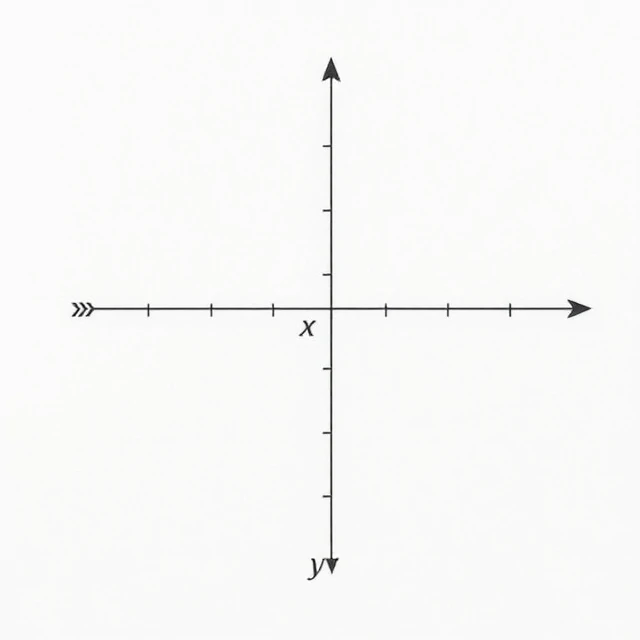
Where a line meets the x-axis or y-axis, that point is an intercept. The y-intercept is where x = 0; the x-intercept is where y = 0. For the line y = 2x + 3, the y-intercept is (0, 3). Setting y = 0 gives x = −1.5, so the x-intercept is (−1.5, 0).
Intercepts help graph equations quickly. Plot the two intercepts and draw the line through them. In slope-intercept form, y = mx + b, the b is the y-intercept. That form makes the line's behavior easy to read: m is the slope, b is where it crosses the vertical axis.
In applications, intercepts often have meaning. In a cost function, the y-intercept might be fixed costs; the x-intercept might be the break-even point. In physics, the intercept of a velocity-time graph can indicate initial velocity. The concept is simple but widely useful.
- Point where a line crosses an axis
- y-intercept: x = 0; x-intercept: y = 0
- In y = mx + b, b is the y-intercept
- Often has practical meaning in applications
Comments
No comments yet. Be the first to share a thought.
Leave a comment