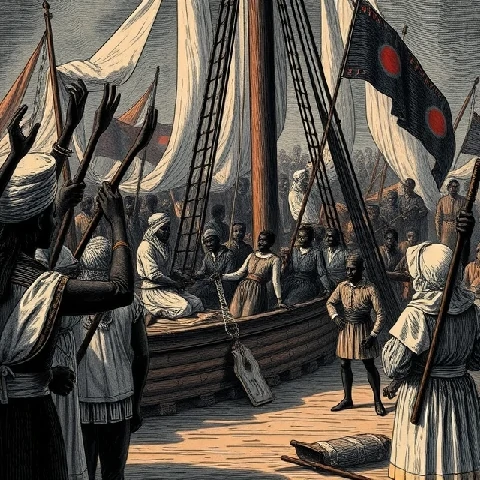
Human beings have been held as property in many societies. Slavery is the institutional ownership and forced exploitation of people who are legally or customarily denied personal freedom and compelled to labor for others.
Forms ranged from household service and debt bondage to large-scale plantation systems. The transatlantic slave trade forcibly transported millions of Africans to the Americas between the fifteenth and nineteenth centuries, generating immense wealth and profound demographic and cultural consequences. Other slave systems existed in the ancient Mediterranean, the Islamic world, Africa, and Asia.
Abolition movements eventually criminalized the legal institution in most jurisdictions, yet coercive labor practices persist in altered forms. Historians study the economic logic, daily resistance, cultural creativity, and long-term legacies of slave societies. The subject remains central to understanding inequality and human rights.
- Ownership and forced exploitation of people
- Existed in many historical societies
- Transatlantic system was especially large-scale
- Legally abolished yet leaves lasting legacies
Comments
No comments yet. Be the first to share a thought.
Leave a comment