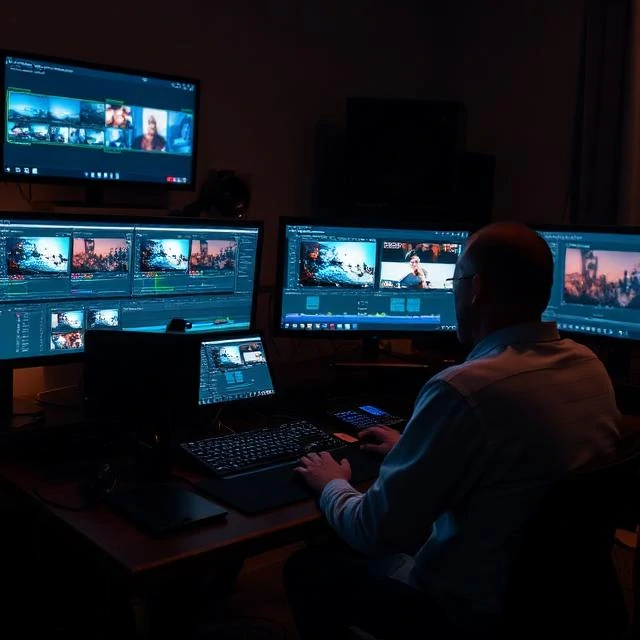
Editing is the process of selecting and arranging shots to form a coherent film. It is where the film is truly made. The editor takes the raw footage, which may be hours or hundreds of hours, and shapes it into a story. They choose the order of shots, the duration of each shot, and the transitions between them. They control the pace, the rhythm, and the emotional arc. The editor is the final storyteller.
Editing is not just assembling. It is interpreting. The editor works with the director to find the best version of the film. They may restructure scenes, cut dialogue, or add music. They may discover that a scene works better in a different position. They may find that a performance is stronger in a different take. The editor's job is to serve the story, not the script.
Editing has its own language. A cut is an abrupt transition. A dissolve is a gradual one. A jump cut breaks continuity. A match cut connects two shots through a visual or thematic link. Cross-cutting alternates between simultaneous scenes. Montage compresses time. Each technique has its own effect. The editor chooses based on the needs of the moment.
The best editing is invisible. The audience does not notice the cuts. They just follow the story. When editing fails, it is jarring. The film feels too slow, too fast, or incoherent. The editor is the invisible artist of cinema.
Comments
No comments yet. Be the first to share a thought.
Leave a comment