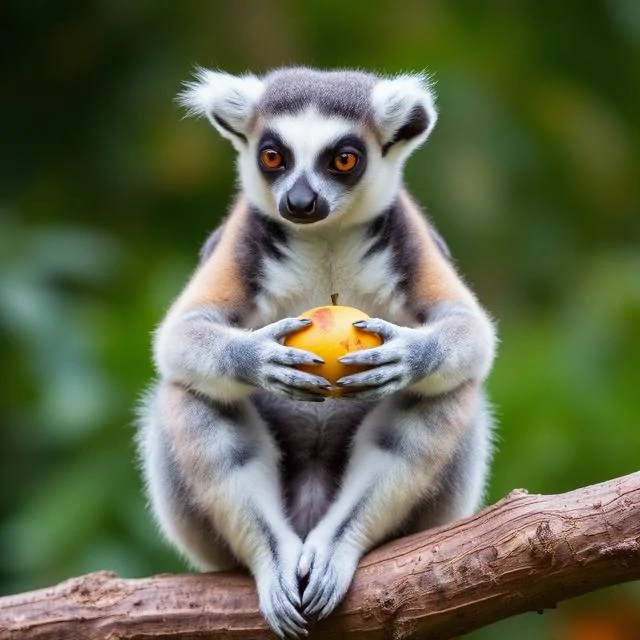
Primates are a mammal order that includes lemurs, lorises, monkeys, apes, and humans. They share a suite of traits: forward-facing eyes that give depth perception, grasping hands and feet, nails instead of claws, and relatively large brains. Most primates live in tropical or subtropical regions, though humans have spread everywhere. There are over 500 recognized species, and new ones are still being described.
Primates are diverse in size and habit. Mouse lemurs weigh less than an ounce. Gorillas can reach 400 pounds. Some are solitary, others live in complex troops with hierarchies and alliances. Diet ranges from leaves and fruit to insects and meat. Social learning is common. Young primates watch their mothers and others, acquiring skills that vary from group to group. That capacity for learning is one reason primates are studied so closely.
Shared traits
- Forward-facing eyes and stereoscopic vision.
- Grasping hands and feet with opposable thumbs.
- Large brain relative to body size.
- Extended parental care and social learning.
Humans are primates. Studying our relatives helps explain what we share and what makes us unusual.
Comments
No comments yet. Be the first to share a thought.
Leave a comment