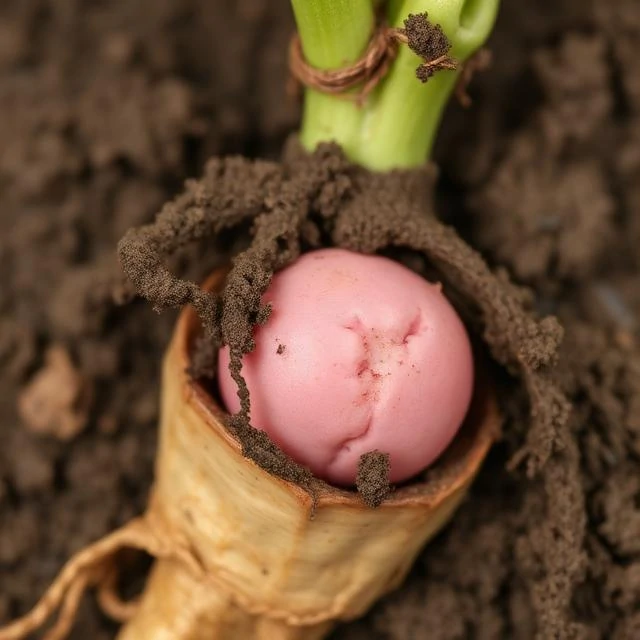
Rhizobium is a genus of soil bacteria that form nodules on the roots of legumes and fix nitrogen inside them. The bacteria take sugars from the plant and, in return, convert atmospheric nitrogen into ammonia the plant can use. The relationship is one of the best-studied symbioses in biology.
Not every Rhizobium strain works with every legume. Soybeans need specific Bradyrhizobium strains, peas and vetch need Rhizobium leguminosarum, and clover needs its own partner. That is why farmers sometimes inoculate seed before planting, coating it with the right bacteria to ensure nodules form.
How the partnership works
- The plant releases flavonoids that attract compatible bacteria
- Bacteria enter root hairs and trigger nodule formation
- Inside the nodule, bacteria convert nitrogen to ammonia
- The plant supplies sugars and minerals in return
Nodules are easy to spot. Cut one open and a healthy, active nodule is pink inside, from the protein leghemoglobin that protects the nitrogenase enzyme from oxygen. A white or green interior means the nodule is not fixing nitrogen.
Comments
No comments yet. Be the first to share a thought.
Leave a comment