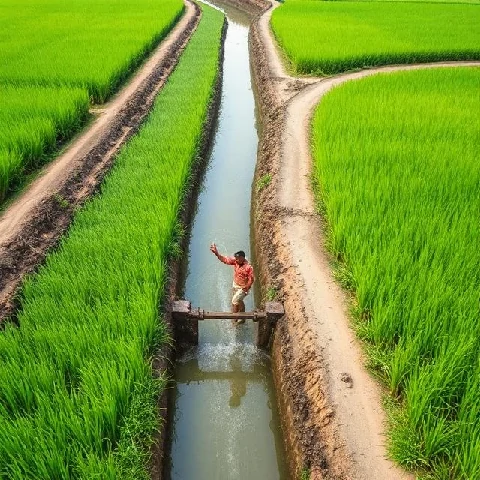
A man-made channel that conveys water to farmland.
🛶
A canal is a man-made waterway constructed to convey water for irrigation, drainage, navigation, or water supply. In agriculture, irrigation canals range from small earthen ditches to large concrete-lined channels carrying water from rivers, reservoirs, or dams to fields. The earliest canals date to ancient Mesopotamia around 4000 BCE, where they irrigated barley and wheat; similar systems appeared in Egypt, the Indus Valley, and China. Roman and medieval engineers built extensive canal networks, and the 17th–19th centuries saw canal-building booms in Europe and North America, driven by both transport and irrigation needs. Modern irrigation canals include unlined channels, which lose water to seepage, and lined or piped systems that improve efficiency. Major examples include the Indus Basin canals in Pakistan, the California Aqueduct, and the Grand Canal of China. Canal management involves scheduling, maintenance, and addressing waterlogging and salinisation, often through subsurface drainage and conjunctive use of groundwater.
Comments
No comments yet. Be the first to share a thought.
Leave a comment