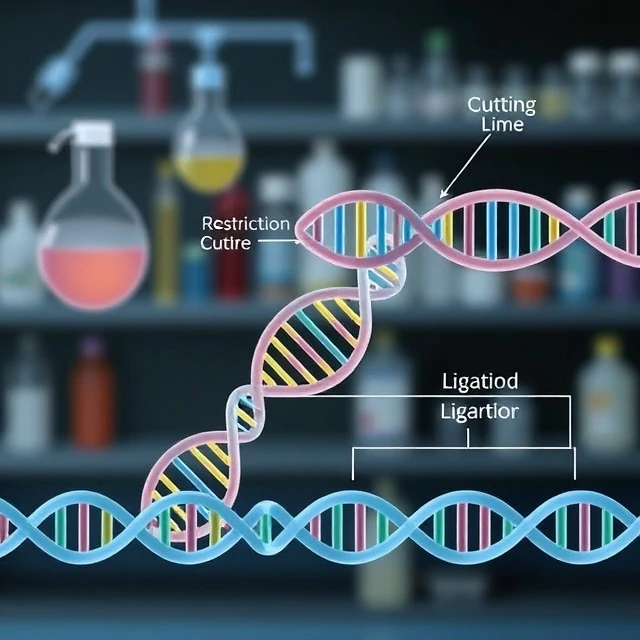
DNA from different sources can be cut and stitched together in the laboratory. Recombinant DNA is the hybrid molecule that results when genetic material from two or more origins is joined. Restriction enzymes create compatible ends; DNA ligase seals the fragments into a continuous strand.
Plasmids are the most common vehicles. A human gene inserted into a bacterial plasmid can be copied inside living cells and later recovered in large amounts. The same approach produces transgenic plants, gene-therapy vectors, and countless research tools.
The first recombinant DNA molecules were made in the early 1970s and sparked both scientific excitement and public debate. Today the technology is routine, yet it still requires careful design to ensure the inserted gene functions correctly and does not disrupt the host. Every insulin vial produced by engineered bacteria is a practical product of recombinant DNA.
- DNA joined from different biological sources
- Created with restriction enzymes and ligase
- Propagated in plasmids or viral vectors
- Foundation of modern biotechnology
Comments
No comments yet. Be the first to share a thought.
Leave a comment