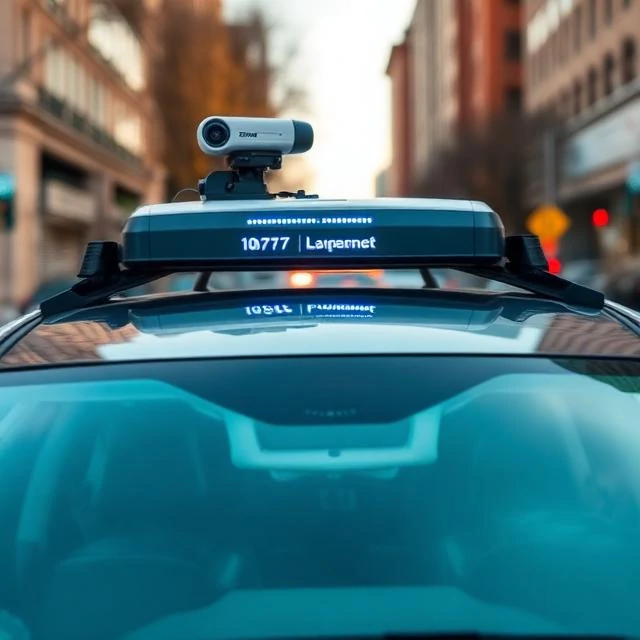
An autonomous car senses its environment and drives without human input. It uses cameras, radar, lidar, and ultrasonic sensors to build a picture of the world around it. Software then plans a path, makes decisions, and controls steering, acceleration, and braking. The goal is a vehicle that never gets tired, distracted, or drunk.
Autonomy is not binary. The SAE defines six levels. Level 0 is no automation. Level 1 and 2 assist the driver. Level 3 allows the car to drive itself in limited conditions, with a human ready to take over. Level 4 handles most driving without human intervention, but may be geofenced. Level 5 is fully autonomous everywhere, and it does not exist yet.
Waymo operates Level 4 robotaxis in Phoenix, San Francisco, and Los Angeles. Cruise ran a similar service in San Francisco before safety incidents forced a pause. Tesla sells a Level 2 system called Full Self-Driving, which is not actually full self-driving. The gap between marketing and reality has caused confusion and, in some cases, crashes.
The technical challenges are enormous. Snow, rain, and construction confuse sensors. Pedestrians behave unpredictably. Edge cases are endless. The legal and ethical questions are just as hard. When a crash is unavoidable, who decides what happens? The answer is still being written.
Comments (3)
Leave a comment