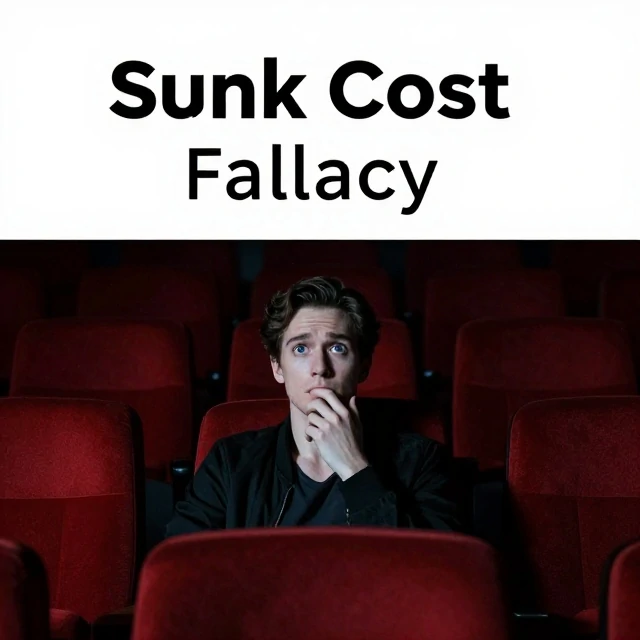
The sunk cost fallacy continues an endeavor because of past investment. You have spent money, time, or effort. You do not want to waste it. So you keep going. But the past investment is gone. It is sunk. It should not affect the decision. Only future costs and benefits matter. The fallacy is emotional. It is the reluctance to accept loss.
The fallacy is common in business, relationships, and everyday life. A company keeps a failing project because it has already spent millions. A person stays in a bad relationship because they have been together for years. A student finishes a degree they hate because they have already completed three years. The past investment is irrelevant. The decision should be about the future.
Sunk cost fallacy examples
- Finishing a bad movie because you paid for the ticket.
- Continuing a war because of soldiers already lost.
- Eating more than you want because you paid for the meal.
- Staying in a bad job because you have been there for years.
- Holding a losing stock because you bought it high.
The sunk cost fallacy is a cognitive bias. It is not logical. The remedy is to ask: if I were starting fresh, would I make this choice? If the answer is no, the past investment is sunk. It should be ignored. That is easier said than done. People hate to waste. They hate to admit they were wrong. The sunk cost fallacy protects the ego. It avoids the pain of loss. But it leads to bigger losses. The best decision-makers ignore sunk costs. They focus on the future. They are willing to cut their losses. That is hard. But it is rational. The past is gone. Only the future matters.
Comments
No comments yet. Be the first to share a thought.
Leave a comment