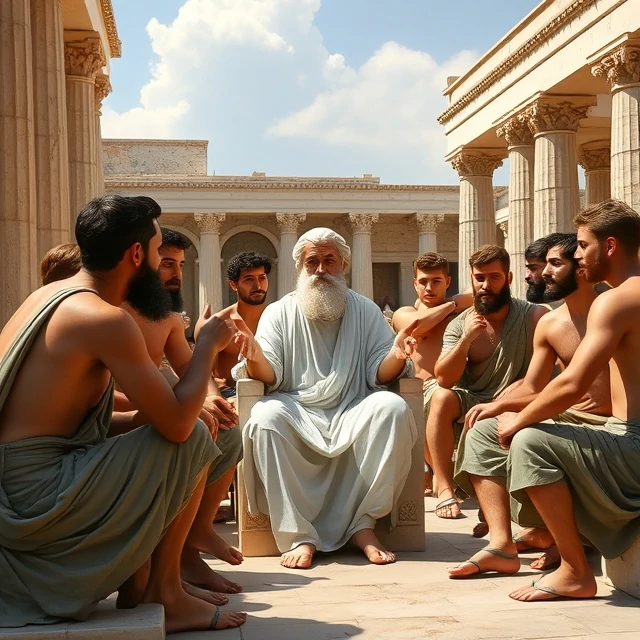
Socrates asked questions. His interlocutors gave answers. He asked more questions. The answers collapsed. Out of the collapse came a better question. That practice, portrayed in Plato's dialogues, is one root of dialectic. Another is Hegel, who described a process in which a thesis generates its antithesis, and the conflict between them produces a synthesis. The synthesis becomes a new thesis, and the process continues. Whether Hegel used those exact terms is debated. The pattern became influential regardless.
Dialectic is not just a method of argument. It is a theory of how ideas develop. For Hegel, history moves through contradictions toward greater freedom and self-consciousness. Marx took the dialectic and put it on material foundations. Ideas do not drive history; economic conditions do. Class conflict is the motor. The dialectic has also been used in theology, literary criticism, and education. In each case, the core idea is the same: truth emerges through the clash of opposing positions, not from a single perspective held in isolation.
Forms of dialectic
- Socratic. Questioning to expose ignorance and stimulate insight.
- Hegelian. Thesis, antithesis, synthesis as a historical process.
- Marxist. Material conditions and class conflict drive change.
- Dialogical. Truth emerges through conversation.
Dialectic is not compromise. The synthesis is not halfway between thesis and antithesis. It is a new position that preserves what is valid in each.
Comments
No comments yet. Be the first to share a thought.
Leave a comment