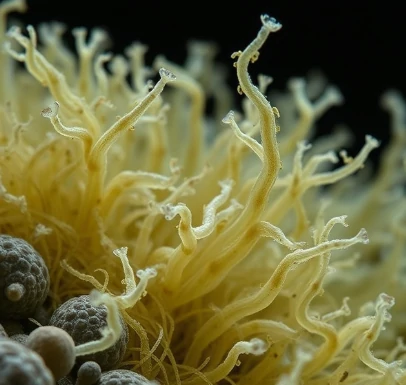
Some organisms thrive in conditions that would kill most life—temperatures above boiling, crushing pressures, near-total darkness, or chemistry rich in toxic metals and gases. These specialists are called extremophiles. The ocean, especially its deep and hydrothermal environments, is one of their primary habitats.
Thermophiles and hyperthermophiles populate black-smoker vents; piezophiles tolerate the pressures of the trenches; psychrophiles flourish in polar and deep cold water. Many are microbes, but some animals, such as certain vent tube worms and amphipods, also qualify. Their enzymes and membranes are adapted to remain functional under stress, offering both scientific insight and potential biotechnological applications.
The existence of extremophiles has expanded the known range of habitable conditions on Earth and informs the search for life elsewhere in the solar system. Studying them requires specialized pressure vessels, high-temperature incubators, and careful sampling that preserves in-situ conditions. Each new vent field or subglacial lake yields organisms with previously unseen adaptations.
- Organism thriving in extreme conditions
- Common at vents, trenches, and polar seas
- Includes microbes and some animals
- Informs astrobiology and biotechnology
Comments
No comments yet. Be the first to share a thought.
Leave a comment