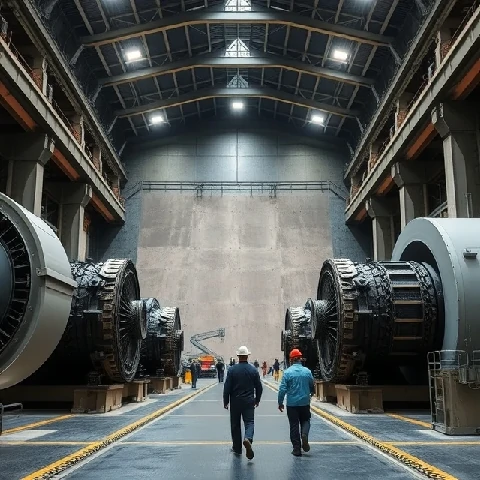
A hydroelectric dam holds back a river to create a reservoir. Water stored behind the dam has potential energy. When released, it flows through turbines, spinning them to generate electricity. The dam controls the flow, storing water when demand is low and releasing it when demand is high.
Dams range in size. The Three Gorges Dam in China is the largest, with over 22 gigawatts of capacity. Small run-of-river projects generate a few megawatts with minimal storage. Pumped hydro stores energy by pumping water uphill when power is cheap and releasing it downhill when power is needed.
Hydropower is renewable and low-carbon. It provides steady power and grid flexibility. It also has costs. Reservoirs flood land and displace communities. Dams block fish migration and trap sediment. Methane can form in reservoirs and escape. These impacts vary by site. Some dams are carefully managed. Others have caused lasting damage.
Key features
- Reservoir storage
- Turbines and generators
- Spillways for flood control
- Fish ladders and mitigation
- Pumped storage variants
Comments
No comments yet. Be the first to share a thought.
Leave a comment