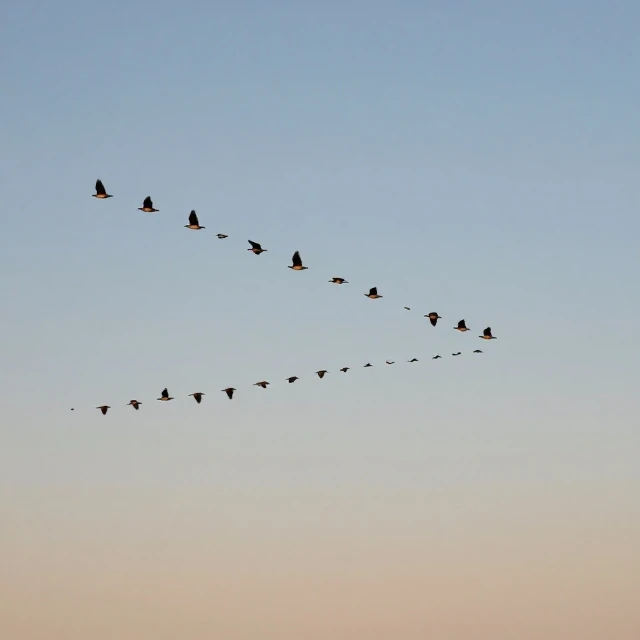
A behavioral adaptation is an action or behavior that helps an organism survive. Migration, hibernation, nocturnal feeding, and courtship displays are all behavioral adaptations. They are not physical features. They are things the organism does.
Behavioral adaptations are often responses to environmental challenges. Birds migrate south for the winter to find food and warmer temperatures. Bears hibernate to conserve energy when food is scarce. Desert animals are nocturnal to avoid the heat of the day. These behaviors are instinctive or learned. They increase the organism's chances of survival and reproduction.
Examples of behavioral adaptations
- Migration: seasonal movement to find resources.
- Hibernation: reduced metabolism during winter.
- Nocturnal behavior: active at night to avoid heat or predators.
- Courtship displays: attracting mates.
- Social behavior: living in groups for protection.
Behavioral adaptations can be innate or learned. Innate behaviors are hardwired. A sea turtle hatchling crawls toward the ocean without being taught. Learned behaviors are acquired through experience. A crow learns to drop nuts on a road for cars to crack. Both types help the organism survive. Behavioral adaptations work together with structural adaptations. A bird's wings are a structural adaptation for flight. Migration is a behavioral adaptation that uses those wings. The two are complementary. Behavioral adaptations are flexible. They can change faster than physical traits. That flexibility helps organisms respond to rapid environmental changes. But behavior alone cannot solve every problem. A species that cannot adapt behaviorally or structurally goes extinct. Behavioral adaptation is one of the tools of survival.
Comments
No comments yet. Be the first to share a thought.
Leave a comment