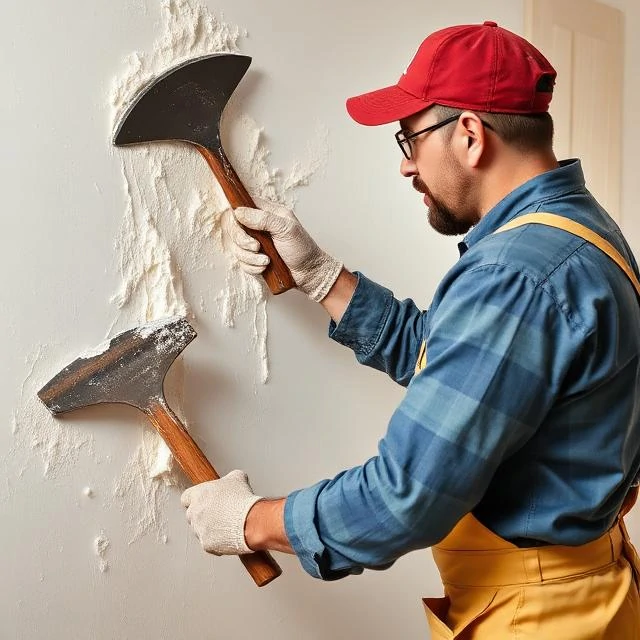
Plastering applies a paste to walls and ceilings to create a smooth surface. It is an old craft. Before drywall, plaster was the standard interior finish. It is still used in historic buildings, high-end homes, and decorative work. Plaster is made of gypsum, lime, or cement, mixed with water and sometimes sand and hair. It is applied in layers over a lath or a masonry surface. The first coat is the scratch coat. The second is the brown coat. The third is the finish coat. Each coat must dry before the next is applied.
Plastering is a skilled trade. The plasterer uses a hawk and trowel to spread the plaster. The hawk holds the plaster. The trowel spreads it. The plasterer works quickly and evenly. The surface must be flat and smooth. The corners must be straight. The finish must be consistent. A bad plaster job shows every trowel mark. A good one looks like a smooth, solid surface. Plaster is harder and more durable than drywall. It is also more expensive and slower to install.
Plastering has several advantages. It is fire-resistant, sound-absorbing, and mold-resistant. It can be shaped into curves, arches, and decorative moldings. It can be tinted or painted. It can be polished to a high sheen. It is also a craft that is dying out. Fewer plasterers are trained each year. The skills are passed down through apprenticeships. In historic preservation, plastering is essential. In modern construction, it is a luxury. The plasterer is an artist with a trowel.
Comments
No comments yet. Be the first to share a thought.
Leave a comment