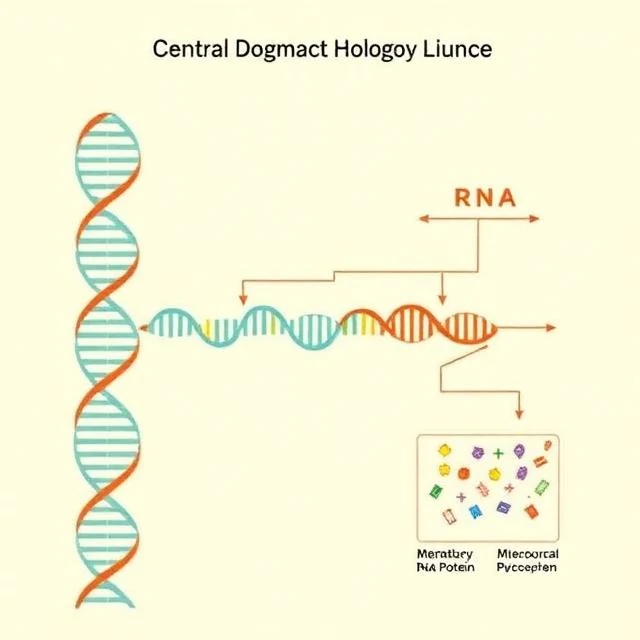
DNA stores the instructions. RNA carries them out. RNA is a nucleic acid similar to DNA, but with two differences: it uses ribose instead of deoxyribose, and it uses uracil instead of thymine. It is usually single-stranded, which allows it to fold into complex shapes and perform diverse functions. RNA is not just a messenger. It is a catalyst, a regulator, and a structural molecule.
There are several types of RNA. Messenger RNA carries the sequence of a gene from DNA to the ribosome, where it is translated into protein. Transfer RNA brings amino acids to the ribosome. Ribosomal RNA forms the core of the ribosome and catalyzes protein synthesis. MicroRNA and small interfering RNA regulate gene expression by binding to mRNA and blocking translation or promoting degradation. Long non-coding RNA has many functions, including regulating transcription and chromatin structure.
RNA is also a tool. mRNA vaccines instruct cells to produce antigens. RNA interference silences genes for research and therapy. RNA aptamers bind targets with high specificity. CRISPR guide RNAs direct editing enzymes to precise locations. RNA sequencing measures gene expression across the transcriptome.
RNA is less stable than DNA, which makes it harder to work with but also more dynamic. Its levels change rapidly in response to signals, making it a sensitive indicator of cellular state.
Comments
No comments yet. Be the first to share a thought.
Leave a comment