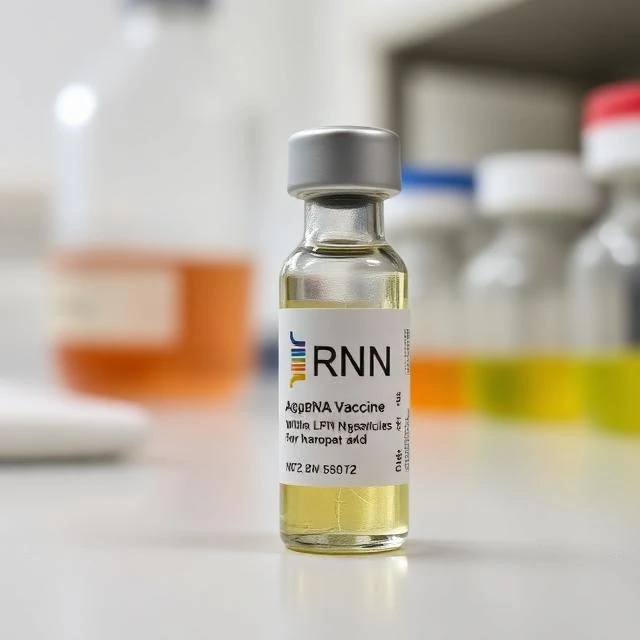
In 2020, the world needed a COVID-19 vaccine fast. Two companies, Pfizer-BioNTech and Moderna, delivered one in less than a year using a technology that had never been approved before. The mRNA vaccine instructs cells to produce a viral protein, which the immune system recognizes and remembers. When the real virus appears, the immune system is ready.
The mechanism is elegant. Messenger RNA is a molecule that carries instructions from DNA to the ribosome, where proteins are made. In an mRNA vaccine, the mRNA encodes a viral antigen, like the SARS-CoV-2 spike protein. The mRNA is packaged in lipid nanoparticles that deliver it into cells. The cells produce the antigen, and the immune system mounts a response. The mRNA is degraded shortly after, and it does not enter the nucleus or alter the cell's DNA.
mRNA vaccines have advantages. They can be designed quickly once the viral sequence is known. They are manufactured using a cell-free process, which is faster and more scalable than traditional vaccine production. They do not contain live virus, so they cannot cause infection. They can be updated rapidly as viruses mutate.
The challenges are stability and delivery. mRNA is fragile and must be stored at low temperatures. Lipid nanoparticles can cause side effects. And the technology is new, so long-term data is limited. Despite the challenges, mRNA vaccines are a major advance, and they are being developed for other diseases, including cancer and influenza.
Comments
No comments yet. Be the first to share a thought.
Leave a comment