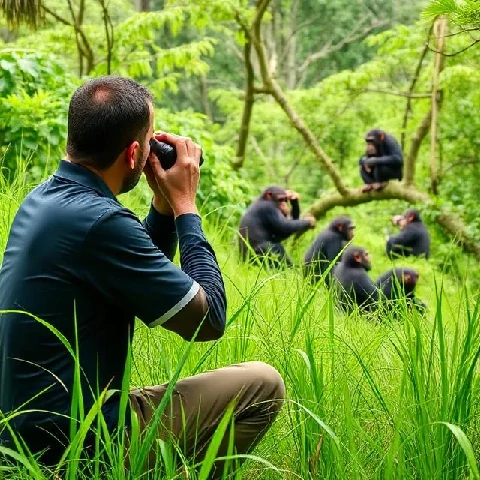
Primatology is the scientific study of primates and their behavior. It began in earnest in the 1950s and 1960s with long-term field studies of chimpanzees, gorillas, and baboons. Jane Goodall's work at Gombe Stream in Tanzania changed how we understand chimpanzees. She documented tool use, hunting, and complex social bonds. Dian Fossey did the same for mountain gorillas in Rwanda. Biruté Galdikas studied orangutans in Borneo. Together they were known as the Trimates.
Modern primatology combines field observation with genetics, endocrinology, and cognitive experiments. Researchers ask how primates solve problems, form alliances, and transmit knowledge. They also study the threats primates face: habitat loss, hunting, and disease. Many primate populations are in sharp decline. Primatologists increasingly work with conservationists and local communities to protect the animals they study.
Research areas
- Social structure and dominance hierarchies.
- Tool use and problem solving.
- Communication and vocal learning.
- Conservation and human-primate conflict.
Primatology sits at the boundary between biology and anthropology. It informs debates about human nature, culture, and the roots of social behavior.
Comments (2)
Leave a comment