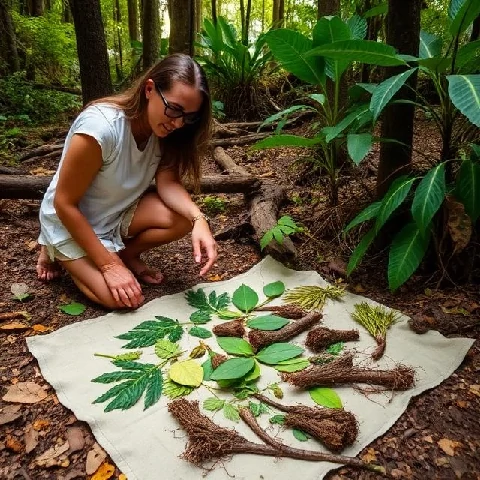
Ethnobotany studies how people use and classify plants. It sits at the intersection of anthropology and botany, and its practitioners spend time in fields, forests, and kitchens learning which plants people eat, heal with, weave, build from, and worship. The knowledge is often detailed and highly local. A single healer in the Amazon may recognize hundreds of species and know exactly when and how to harvest each one.
The field has practical value. Many modern medicines trace back to plants identified through indigenous knowledge, including quinine, aspirin's predecessor, and several cancer drugs. Ethnobotanists also document food systems, fiber crafts, and sacred plants before the knowledge disappears. That urgency is real: when elders die without passing on what they know, centuries of accumulated observation can vanish.
What ethnobotanists do
- Collect and identify plant specimens with local collaborators.
- Record names, uses, and preparation methods.
- Study classification systems and symbolic meanings.
- Work with communities on conservation and benefit-sharing.
Ethical practice means asking permission, crediting local experts, and making sure benefits return to the communities that shared the knowledge.
Comments
No comments yet. Be the first to share a thought.
Leave a comment