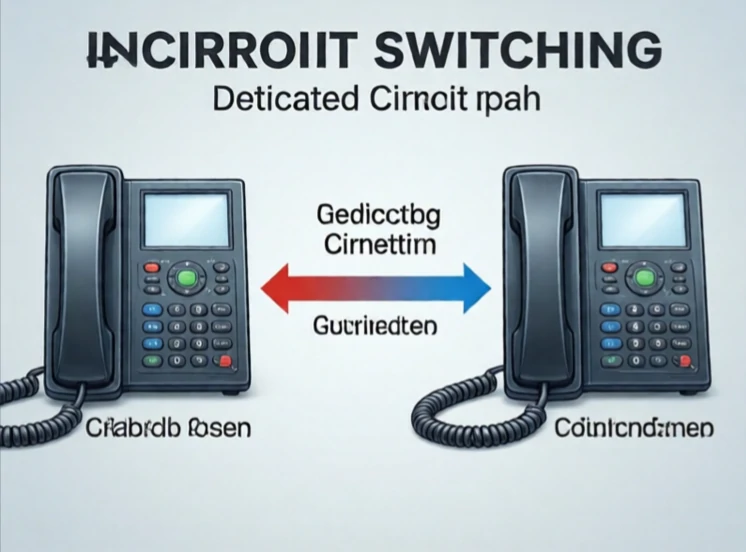
Pick up a landline phone and dial. A path opens between you and the other party. It stays open for the whole call. That is circuit switching — a method establishing a dedicated path for a call. The path is reserved. No one else can use it. When you hang up, the path is released.
Circuit switching was the foundation of the telephone network. It works well for voice. The connection is reliable. There is no delay. But it wastes capacity. When you pause to listen, the circuit is still reserved. Silence uses the same resources as speech.
Circuit switching vs. packet switching
- Circuit: dedicated path, fixed capacity, low latency
- Packet: shared path, flexible capacity, variable latency
- Circuit: used in traditional telephony
- Packet: used in the internet and VoIP
Circuit switching is fading. The public switched telephone network still uses it in places. But voice over IP uses packet switching. The internet is packet-switched. Circuits are reliable but inefficient. Packets are efficient but need more intelligence. The world chose packets.
Comments
No comments yet. Be the first to share a thought.
Leave a comment