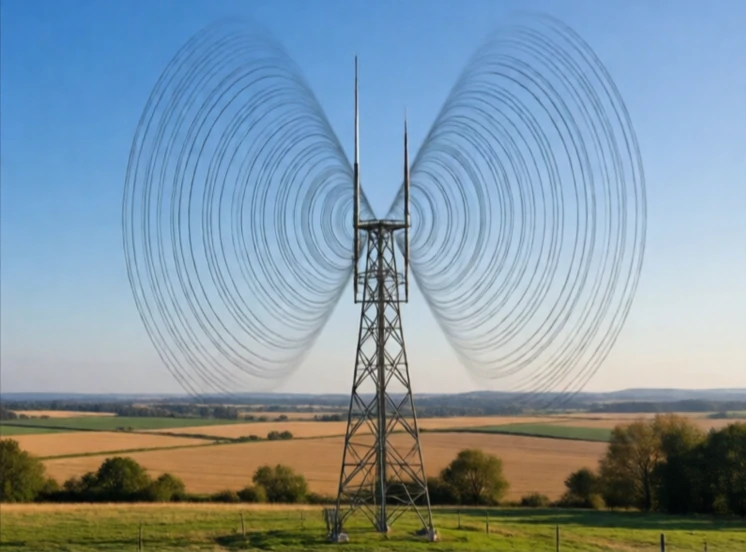
A carrier wave is a waveform that carries information through modulation. It is a steady, high-frequency signal. On its own, it carries nothing. But when its amplitude, frequency, or phase changes, it carries data. The carrier is the vehicle. The modulation is the message.
Carrier waves are used in radio, television, Wi-Fi, and cellular. A radio station broadcasts at a fixed frequency, say 100.1 MHz. That is the carrier. The audio signal modulates the carrier. The receiver tunes to the carrier and extracts the audio. Without the carrier, the signal would not propagate efficiently through the air.
Modulation types
- AM: amplitude modulation
- FM: frequency modulation
- PM: phase modulation
- QAM: quadrature amplitude modulation
- OFDM: orthogonal frequency division multiplexing
Carrier waves must be strong enough to reach the receiver. They must be on a frequency that the receiver can tune to. They must not interfere with other carriers. The carrier is the foundation of wireless communication. Everything else builds on it.
Comments (3)
Leave a comment