Closed-loop control uses feedback to keep a system on target. The controller measures the output, compares it to the desired value, and adjusts the input to reduce the error. It is a continuous conversation between command and result.
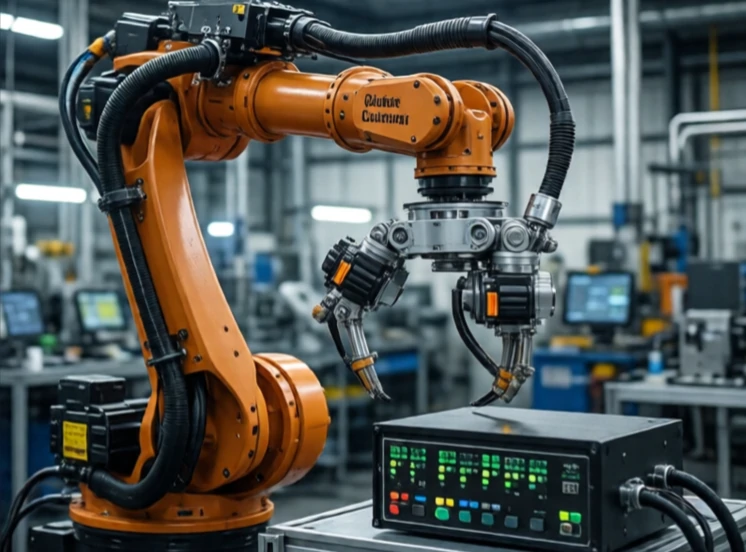
The thermostat is the classic example. It measures room temperature, compares it to the setpoint, and turns the heater on or off. A robot arm uses the same logic: an encoder measures joint angle, the controller compares it to the commanded angle, and the motor adjusts. Without feedback, the system runs open-loop and drifts.
Key terms in closed-loop control
- Setpoint: the desired value.
- Error: the difference between setpoint and actual.
- Feedback: the measured output.
- Controller: the algorithm that computes the correction.
- Actuator: the device that applies the correction.
PID control is the workhorse. Proportional action responds to current error. Integral action corrects accumulated error. Derivative action anticipates future error. Tuning the three gains is part art, part science. Too much gain and the system oscillates. Too little and it responds sluggishly. Modern robots use more advanced methods like model predictive control, but the fundamental idea is the same: measure, compare, correct, repeat. It is the difference between a machine that hopes for the best and one that knows what is happening.
Comments
No comments yet. Be the first to share a thought.
Leave a comment