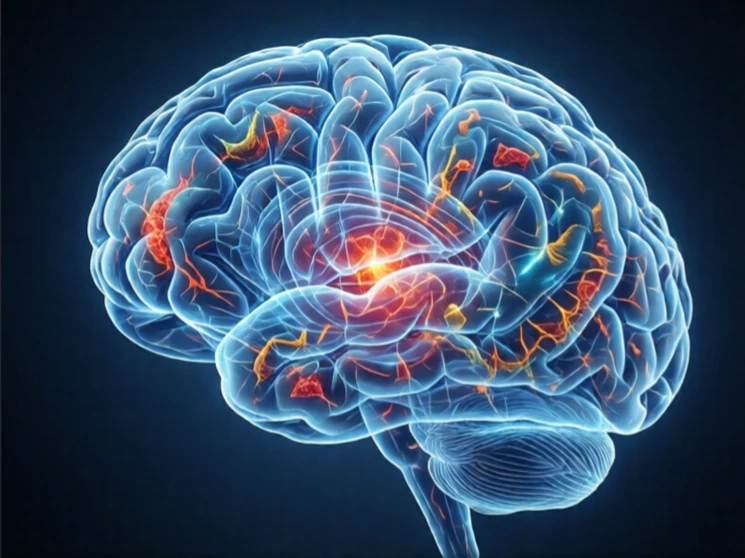
Plasticity is the brain’s capacity to change its structure and function in response to experience, learning, or injury. Synapses strengthen or weaken, new connections form, and in some cases undamaged regions take over functions that were previously handled by damaged ones.
Plasticity is greatest early in life, during critical and sensitive periods when sensory and motor systems are being fine-tuned. It continues throughout adulthood, supporting skill acquisition and memory formation. After stroke or other focal injury, intensive rehabilitation can drive reorganization that restores some lost abilities. Constraint-induced movement therapy and similar approaches exploit plasticity by forcing the use of impaired limbs and thereby encouraging cortical remapping.
Not all plasticity is beneficial. Maladaptive changes can contribute to chronic pain, phantom-limb sensation, and certain psychiatric conditions. The same mechanisms that allow recovery and learning can, under different circumstances, entrench unwanted patterns.
The brain is not a fixed machine. Its ongoing capacity to reorganize is what the term plasticity names.
Comments
No comments yet. Be the first to share a thought.
Leave a comment