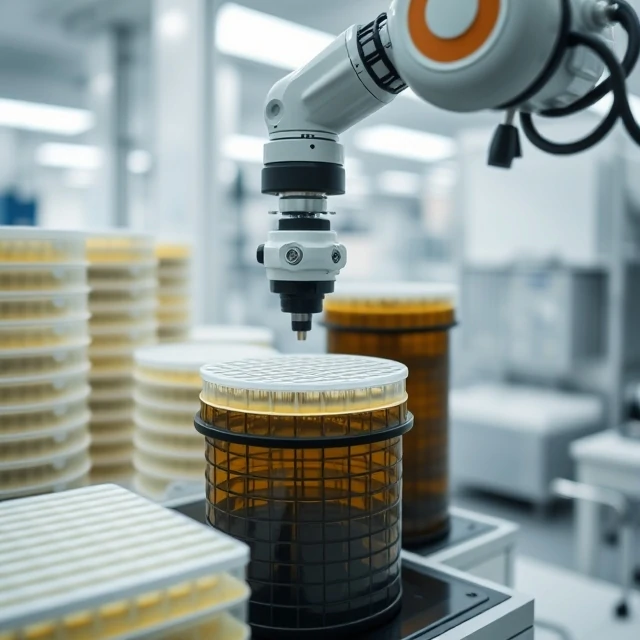
Imagine testing a million compounds in a week. That is high-throughput screening, a robotic and computational approach to drug discovery that lets researchers evaluate vast libraries of chemicals for biological activity. Instead of testing one compound at a time in a test tube, HTS uses multi-well plates, robotic liquid handlers, and automated detectors to run thousands of experiments in parallel. The goal is to find hits, compounds that show activity against a target, which can then be optimized into leads.
The technology emerged in the 1990s as combinatorial chemistry made it possible to synthesize large libraries of compounds. HTS platforms use 384-well or 1536-well plates, each well containing a tiny reaction volume. Robotic arms move plates between liquid handlers, incubators, and readers. Assays are designed to produce a signal, such as fluorescence or absorbance, when a compound interacts with the target. The data are analyzed with software that flags active wells and filters out false positives. Hits are retested to confirm activity.
Key components:
- Compound libraries. Collections of thousands to millions of chemicals.
- Assays. Biochemical or cell-based tests that measure activity.
- Robotics. Automated liquid handling and plate movement.
- Detection. Optical readers that measure fluorescence, absorbance, or luminescence.
- Data analysis. Software to identify hits and filter noise.
HTS does not find drugs. It finds starting points. Turning a hit into a drug takes years of medicinal chemistry.
Comments (2)
Leave a comment