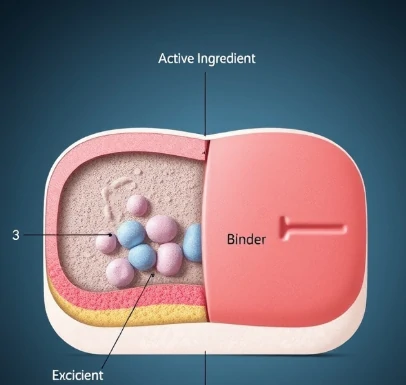
The active ingredient gets the credit. The excipients do the work. An excipient is anything in a medication that is not the active ingredient. It might be a filler to add bulk, a binder to hold a tablet together, a disintegrant to help it break apart in the stomach, a coating to mask taste, or a preservative to extend shelf life. Excipients are supposed to be inert, but they are not always.
Lactose, a common filler, can cause digestive symptoms in people with lactose intolerance. Some dyes trigger allergic reactions. Preservatives like thimerosal in vaccines have been the subject of public concern, though the evidence does not support harm at the doses used. Excipients can also affect how a drug is absorbed. A change in filler from one manufacturer to another can alter the rate of dissolution and change the drug's effect, which is one reason generic drugs must demonstrate bioequivalence.
Common excipient roles:
- Fillers. Add bulk to small-dose drugs.
- Binders. Hold powders together in a tablet.
- Disintegrants. Help tablets break apart in the gut.
- Lubricants. Prevent sticking during manufacturing.
- Coatings. Mask taste, control release, or protect from moisture.
The excipient list on a label is worth reading if you have allergies or intolerances. Most people never need to think about it.
Comments (3)
Leave a comment