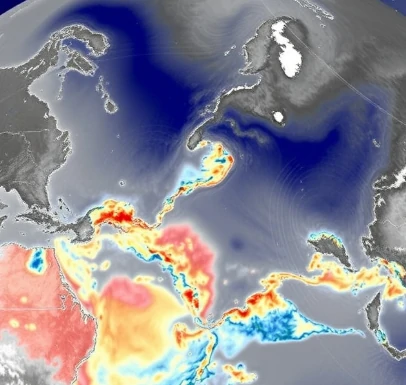
When the central and eastern tropical Pacific Ocean cools below average, the resulting pattern is La Niña. Stronger-than-normal trade winds push warm surface water westward and enhance upwelling of cold water along the equator and South American coast.
The cooler ocean alters atmospheric circulation. Rainfall often increases over Indonesia and northern Australia while drought becomes more likely along the west coast of South America. In North America, La Niña winters frequently bring colder conditions to the north and drier weather across the southern United States.
La Niña events typically last one to three years and alternate with El Niño and neutral conditions. Fisheries, agriculture, and water management all respond to the forecast of a La Niña year. Global average temperatures tend to be slightly lower during La Niña, though the long-term warming trend continues.
Monitoring sea-surface temperatures provides early indication of developing events.
Comments
No comments yet. Be the first to share a thought.
Leave a comment