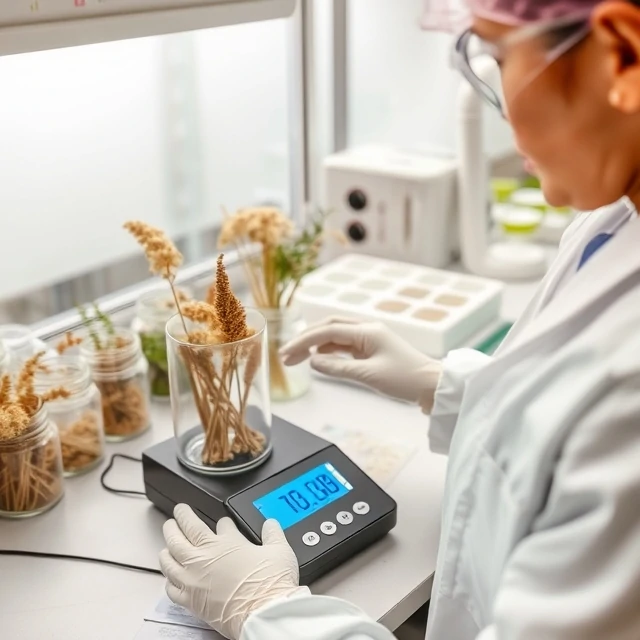
Biomass is the total mass of living organisms in a given area. It is usually measured as dry weight per unit area, grams per square meter or tons per hectare. The term can refer to a specific group, like the biomass of earthworms in a field, or to an entire ecosystem. Forests hold most of the terrestrial biomass, with trees accounting for the largest share. In the ocean, plankton and fish dominate, though the total is far less than on land.
Biomass pyramids show how energy moves through an ecosystem. Producers, like plants and algae, form the base. Herbivores, which eat producers, form the next level. Carnivores sit above them. Each level holds less biomass than the one below because energy is lost as heat at every transfer. This is why food chains rarely have more than four or five links. Top predators are scarce for a reason. There is not enough energy left to support many of them.
Common measures
- Standing biomass: the mass present at one time.
- Primary productivity: the rate at which plants create biomass.
- Pyramid of biomass: a diagram of mass at each trophic level.
- Carbon stock: biomass expressed as stored carbon.
Biomass also matters for climate. Forests store carbon in wood and soil. When they burn or are cleared, that carbon returns to the atmosphere.
Comments
No comments yet. Be the first to share a thought.
Leave a comment