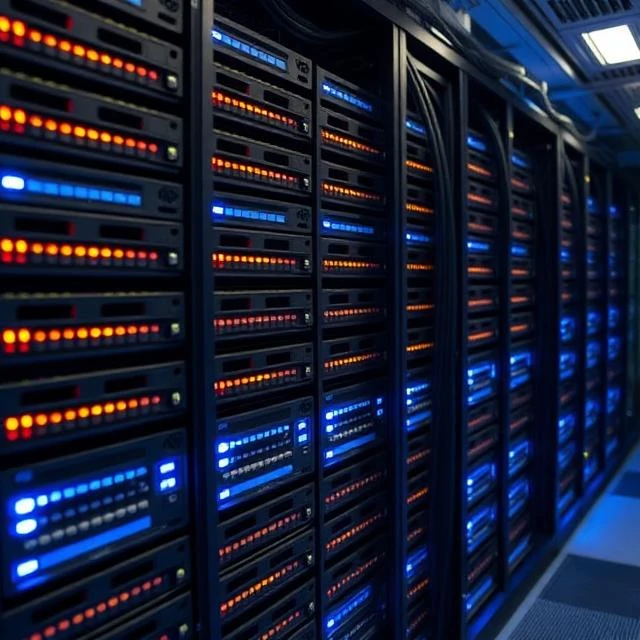
A server provides data or services to other computers. It runs continuously, listening for requests and responding to them. A web server delivers web pages. A database server stores and queries data. A file server shares files across a network. A mail server sends and receives email. The term describes both the hardware and the software. A physical server is a computer optimized for reliability and throughput. A virtual server is a software instance running on shared hardware. The role matters more than the form.
Servers differ from desktops in their design priorities. They run 24/7. They have redundant power supplies, error-correcting memory, and hot-swappable disks. They sit in data centers with cooling and physical security. They are managed remotely, often without a monitor or keyboard attached. The operating system is tuned for throughput and stability. Linux dominates the server market, though Windows Server holds significant share in enterprise environments. Cloud computing changed the economics. Instead of buying and maintaining physical servers, organizations rent virtual servers by the hour. They scale up and down as needed. The physical hardware still exists. It just belongs to someone else. The server as a concept remains. It serves. That is the job.
Server types
- Web server — serves web pages and APIs
- Database server — stores and queries data
- File server — shares files across a network
- Mail server — handles email
- Application server — runs business logic
A server is a computer with a job. The job is to serve other computers. Everything else follows from that.
Comments
No comments yet. Be the first to share a thought.
Leave a comment