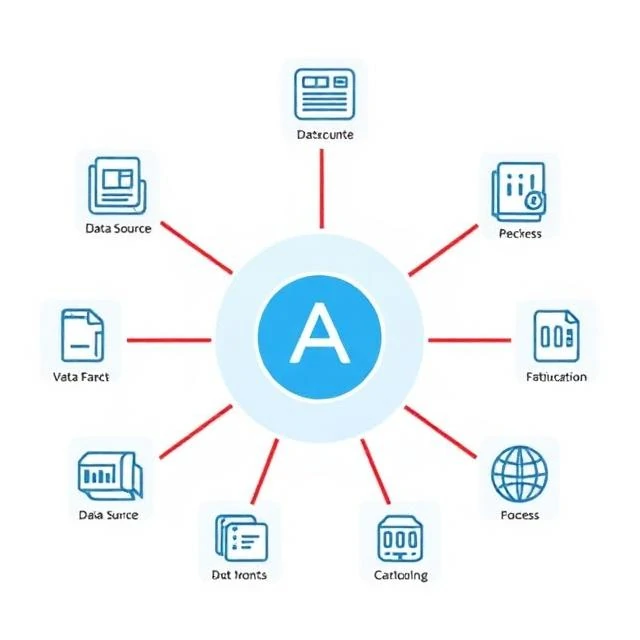
Data integration combines data from different sources into a unified view. A company has customer data in a CRM, transaction data in an ERP, and support tickets in a help desk system. Each system knows part of the story. Integration brings the parts together so the whole picture emerges. Without it, analysts query each system separately and reconcile by hand.
The approaches vary. ETL extracts data from sources, transforms it to a common format, and loads it into a target system. ELT reverses the order, loading raw data first and transforming it later. The choice depends on the target system's capabilities and the team's preferences. Cloud data warehouses made ELT popular because they can handle transformations at scale. API-based integration connects systems in real time. Message queues decouple producers from consumers. Master data management ensures that core entities like customers and products have a single authoritative definition. The hard part is not the technology. It is the semantics. Two systems may use different codes for the same customer. One system records a sale when the order is placed. Another records it when the product ships. Reconciling those differences requires business rules, not just technical connectors. Integration projects fail when the data means different things in different places.
Integration approaches
- ETL — extract, transform, load
- ELT — extract, load, transform
- API integration — real-time connections between systems
- Message queues — asynchronous data exchange
- Master data management — single source of truth for key entities
Integration is as much about agreement as technology. The systems can connect. The definitions must match.
Comments
No comments yet. Be the first to share a thought.
Leave a comment