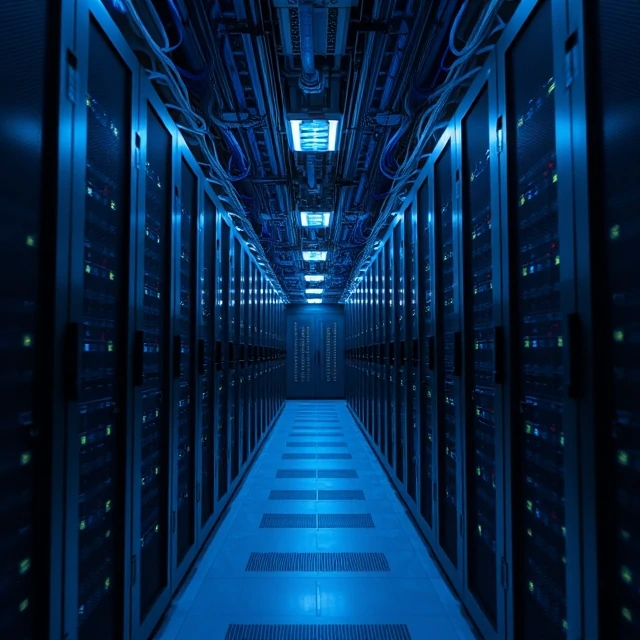
A data center houses servers, storage, and networking equipment. It keeps them cool, powered, and connected. The building itself is engineered for the job. Redundant power feeds, backup generators, cooling systems, fire suppression, and physical security. A Tier IV data center can tolerate a single equipment failure without downtime. That level of resilience costs money, which is why only the largest organizations build their own.
Modern data centers look different from the ones built a decade ago. Virtualization packed more workloads onto fewer physical servers. Cloud providers built massive facilities in places with cheap power and cool climates. Hyperscale data centers now consume as much electricity as small cities. The efficiency metrics improved dramatically. Power usage effectiveness, or PUE, measures how much energy goes to computing versus cooling and overhead. Google's data centers run around 1.1 PUE. The industry average is closer to 1.5. That gap represents real money and real carbon. Edge computing pushes some workloads closer to users, reducing latency and bandwidth costs. The centralized data center is not going away. It is being supplemented by smaller facilities closer to the action.
Data center components
- Servers — compute resources for workloads
- Storage — disk arrays and tape libraries
- Networking — switches, routers, and cabling
- Power — redundant feeds, UPS, generators
- Cooling — air handlers, chillers, liquid cooling
A data center is a factory for data. The product is uptime. Everything else supports that goal.
Comments
No comments yet. Be the first to share a thought.
Leave a comment