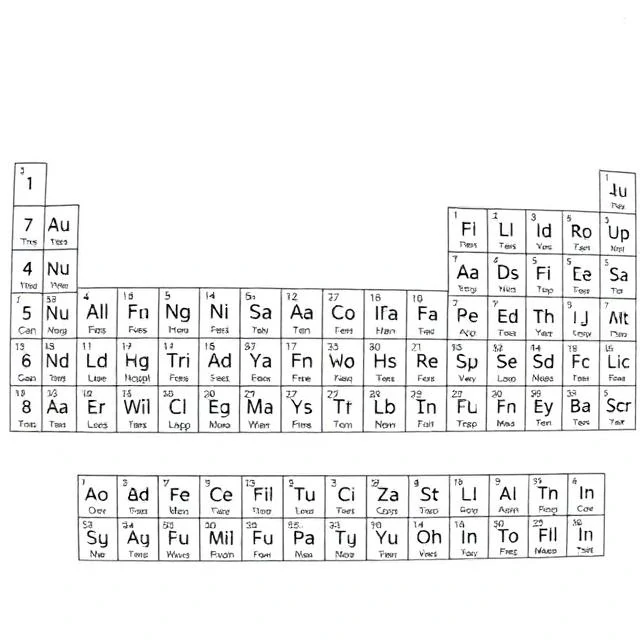
Gold, oxygen, helium, copper, carbon. These are elements, pure substances consisting of only one type of atom. There are 118 known elements, 94 of which occur naturally on Earth. The rest are synthesized in laboratories. Each element has a unique atomic number, which is the number of protons in its nucleus. The periodic table arranges the elements in order of increasing atomic number, revealing patterns in their properties.
Elements are the building blocks of matter. They cannot be broken down into simpler substances by chemical means. They can combine to form compounds, but the element itself remains unchanged. Oxygen is an element. Water is a compound of hydrogen and oxygen. The distinction matters in chemistry. Elements are the simplest forms of matter with distinct chemical identities.
Elements exist in different forms. Some are monatomic, like helium and neon. Some are diatomic, like hydrogen, oxygen, and nitrogen. Some form complex structures, like carbon in diamond or graphite. The form depends on the element's bonding behavior and the conditions. Allotropes are different structural forms of the same element. Diamond, graphite, and graphene are all allotropes of carbon.
The elements were forged in stars. Hydrogen and helium formed in the Big Bang. Heavier elements formed through nuclear fusion in stellar cores and supernova explosions. The atoms in your body were made in stars. You are, in a literal sense, stardust.
Comments (2)
Leave a comment