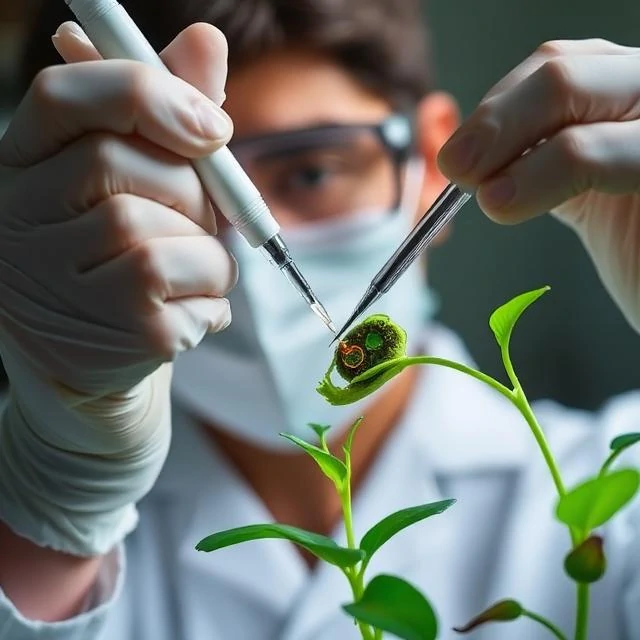
Humans have altered the genetics of plants and animals for thousands of years through selective breeding. Genetic engineering does it directly. It modifies an organism's genetic material using laboratory techniques, bypassing the slow process of breeding. A gene from one organism can be inserted into another, across species boundaries that would never cross naturally.
The tools have evolved. Restriction enzymes cut DNA at specific sequences. Ligase joins fragments together. Plasmids carry genes into bacteria. CRISPR and other editing tools make precise changes at targeted locations. The result can be a bacterium that produces human insulin, a corn plant resistant to insects, or a mouse that models human disease.
Genetic engineering is used in medicine, agriculture, and research. It produces therapeutic proteins, vaccines, and gene therapies. It creates crops with higher yields and lower pesticide use. It generates animal models for studying disease. It is also used in industrial biotechnology to make enzymes, chemicals, and biofuels.
The technology raises concerns. Safety questions focus on unintended effects and ecological impacts. Ethical questions focus on altering the human germline and the boundaries of species. Regulatory systems vary by country. The United States regulates genetically engineered organisms under the Coordinated Framework, which splits oversight among the FDA, EPA, and USDA. Europe takes a more precautionary approach. The debate is not going away.
Comments
No comments yet. Be the first to share a thought.
Leave a comment