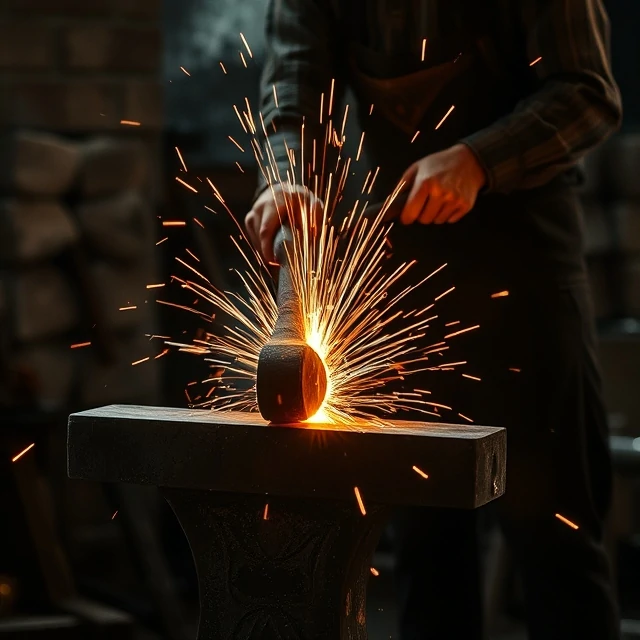
Ένα σιδηρουργείο αναγνωρίζεται από τον ήχο του: τον κρότο ενός σφυριού πάνω σε ατσάλι. Το αμόνι είναι το μπλοκ που παράγει αυτόν τον κρότο. Είναι ένα βαρύ μπλοκ από σίδηρο ή χάλυβα, που συχνά ζυγίζει 100 έως 300 λίβρες, τοποθετημένο σε ένα ξύλινο κούτσουρο ή σε μια μεταλλική βάση. Ο σιδηρουργός τοποθετεί ζεστό μέταλλο στην πρόσοψή του και το χτυπάει με ένα σφυρί. Η μάζα του ακμονιού απορροφά το χτύπημα και το επιστρέφει, διαμορφώνοντας το μέταλλο αντί να αναπηδά το σφυρί.
An anvil has several parts. The face is the flat top, hardened and polished. The horn is the tapered cone at one end, used for bending curves and rings. The step, or shelf, is a lower flat area near the horn for cutting. The hardy hole holds a chisel or a hot cut. The pritchel hole holds a punch. Each feature has a purpose, and a smith uses all of them in a single day's work.
Good anvils are not cheap. A new one can cost over $1,000. Antique anvils, like those made by Peter Wright or Hay-Budden, are prized for their hardened faces and clear ring. A dull thud instead of a ring often means a cracked or delaminated face. The anvil is the center of the forge. Everything else is arranged around it.
Comments
No comments yet. Be the first to share a thought.
Leave a comment