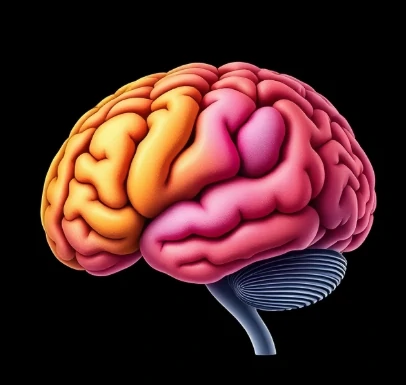
Although the two cerebral hemispheres look similar, they are not functionally identical. Lateralization refers to the tendency for certain cognitive or perceptual functions to be performed more efficiently by one hemisphere than the other.
Language is the most thoroughly documented example: in the large majority of right-handers, and in many left-handers, the left hemisphere is dominant for speech production and comprehension. Some aspects of spatial attention and face processing show right-hemisphere bias. Lateralization is graded rather than absolute; both hemispheres usually contribute, but one may take the lead.
The degree of lateralization can be assessed with imaging, with sodium-amobarbital testing, or after unilateral injury. Early injury can sometimes shift language to the opposite hemisphere, illustrating residual plasticity. Understanding lateralization helps predict deficits after stroke and guides neurosurgical planning near eloquent cortex.
- Specialization of function in one hemisphere
- Most pronounced for language
- Graded rather than absolute
- Important for clinical localization
Comments
No comments yet. Be the first to share a thought.
Leave a comment