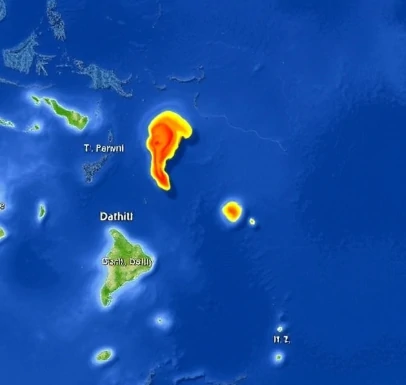
Across the tropical Pacific, surface atmospheric pressure rises and falls in a seesaw pattern. When pressure is high over the eastern Pacific it tends to be low over the western Pacific, and vice versa. That pressure fluctuation is the Southern Oscillation.
The Southern Oscillation is tightly linked to the ocean temperature changes of El Niño and La Niña. Together they form the El Niño–Southern Oscillation, or ENSO, system. The Southern Oscillation Index quantifies the pressure difference between Tahiti and Darwin and serves as a key monitor of the state of ENSO.
Shifts in the Southern Oscillation alter trade-wind strength, rainfall distribution, and the likelihood of drought or flood in many parts of the world. The index is used in seasonal forecasting to anticipate those impacts months in advance.
- Pressure seesaw across tropical Pacific
- Linked to El Niño and La Niña
- Measured by the Southern Oscillation Index
- Influences global seasonal climate
Comments
No comments yet. Be the first to share a thought.
Leave a comment