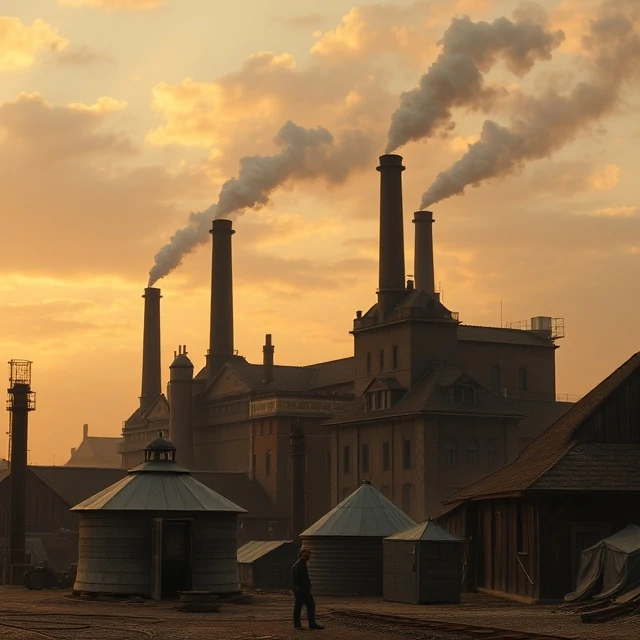
Machines began to replace hand labor on a transformative scale. The Industrial Revolution was the shift, beginning in Britain in the late eighteenth century, toward mechanized manufacturing, fossil-fuel energy, and factory organization. It later spread to other regions with local variations.
Textiles, iron, and coal were early leading sectors. Steam power, new machine tools, and improved transport multiplied output. Urbanization accelerated as workers moved to factory towns. Living standards eventually rose for many, yet early industrial conditions were often harsh and environmentally damaging.
Historians debate the relative importance of institutions, culture, resources, and contingency in explaining why the breakthrough occurred when and where it did. The revolution reorganized global economic relations and remains the foundation of modern material life. Its social and ecological consequences continue to unfold.
- Transition to mechanized industrial production
- Began in Britain in the late 18th century
- Driven by new energy sources and organization
- Reshaped economy, society, and environment
Comments
No comments yet. Be the first to share a thought.
Leave a comment