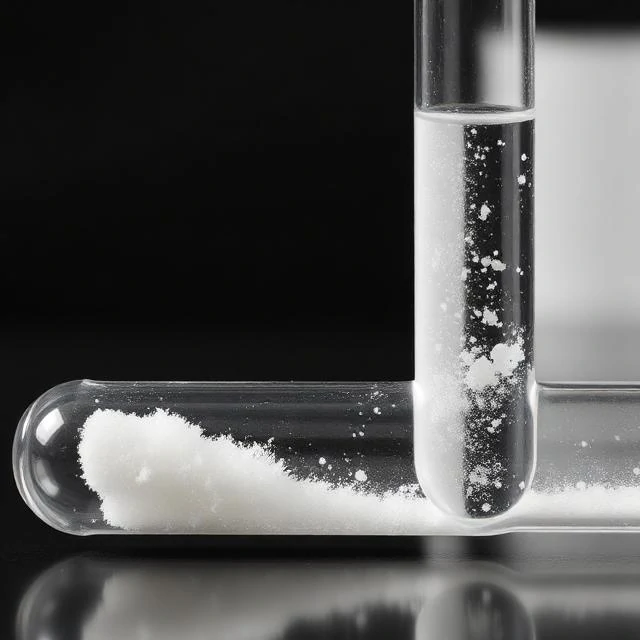
Mix two clear solutions, and a solid appears. That is precipitation, the formation of an insoluble solid from a solution during a chemical reaction. The solid is called the precipitate. The reaction occurs when two soluble compounds react to form an insoluble product. For example, mixing silver nitrate and sodium chloride produces silver chloride, a white precipitate, and sodium nitrate, which remains dissolved.
Precipitation occurs when the product exceeds its solubility limit. The ions in solution combine to form a solid that cannot stay dissolved. The solubility rules predict which compounds are soluble and which are not. Most nitrate salts are soluble. Most chloride salts are soluble, except silver, lead, and mercury. Most carbonate, phosphate, and sulfide salts are insoluble, except those of alkali metals and ammonium.
Precipitation is used in chemistry for gravimetric analysis, where the mass of the precipitate determines the amount of analyte. It is used in water treatment to remove heavy metals and phosphates. It is used in photography to develop film. It is used in medicine to test for certain diseases. It is used in industry to produce pigments, catalysts, and pharmaceuticals.
Precipitation is also a natural process. It forms minerals, stalactites, and sea shells. It occurs in the body when calcium phosphate precipitates in bones and teeth. It occurs in the kidneys when calcium oxalate precipitates as stones. The same chemistry that purifies water can also cause disease.
Comments (2)
Leave a comment